Hancock named first U.S. Finno-Ugric capital of culture
Hancock is the first American community to be named a Finno-Ugric Capital of Culture.
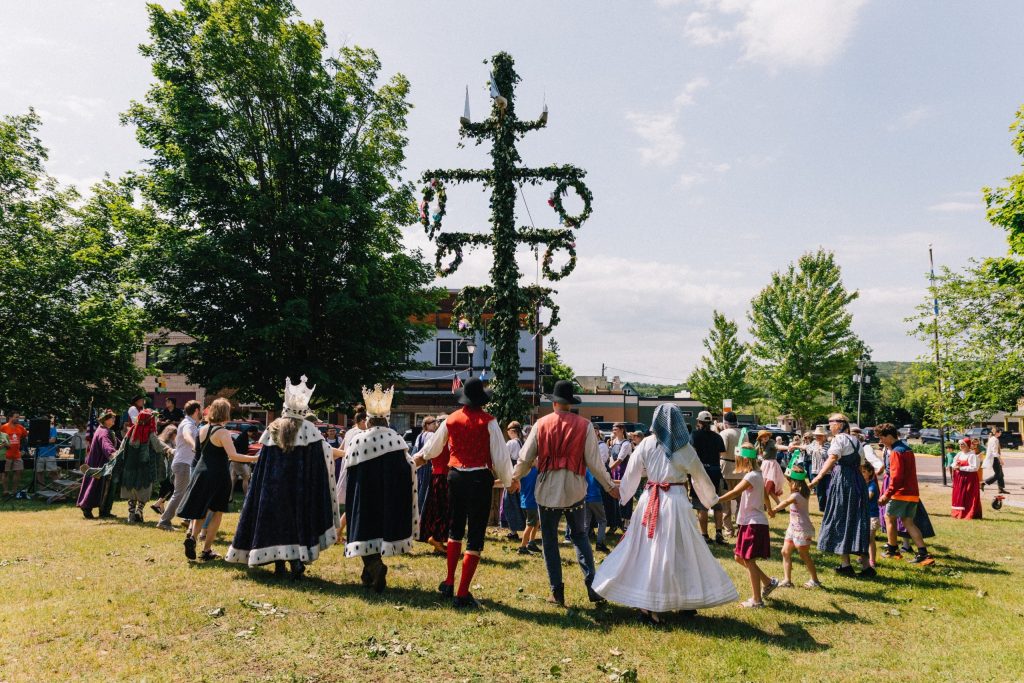
A massive bonfire crackled along the Portage Canal as Hancock residents gathered earlier this summer to celebrate Juhannus, the Finnish midsummer festival. The longest day of the year brought community members out to soak in saunas, sip cider and perform traditional Finnish dances while traditional folk music played in the background.
Though midsummer celebrations aren’t new to the Keweenaw Peninsula, it returned this year in full form after a decade hiatus in Hancock. And it came back with a bang. Events spread from the harbor’s edge to the streets of downtown and continued for two days. The city of Hancock even erected a brand-new midsummer pole on the city lawn.
The celebration, which included beer gardens, live music, traditional Finnish dance and even a wife-carrying contest, also came with exciting news: Hancock was named a Finno-Ugric Capital of Culture, becoming the first community in the United States to receive the international designation.
The award, given annually by the Estonia-based URALIC Centre, is inspired by the European Union’s Capitals of Culture program and recognizes communities that preserve and promote Finno-Ugric heritage, a cultural and linguistic group that includes Finns, Estonians, Hungarians and Sámi, among others.
“It’s a high honor for Visit Keweenaw,” said Jesse Wiederhold, public relations and events coordinator. “Out of all the places in the entire world, we are the first American community to get the designation.”
Past recipients include small towns in Estonia, Hungary, and Russia.
“The title of Finno-Ugric Capital of Culture in the USA opens new bridges,” said jury chairwoman Britt-Kathleen Mere of Hõimulõimed MTÜ, who helped determine Hancock as the recipient of the designation. “This is not only an opportunity for Hancock to introduce Finno-Ugric culture to Americans but also gives us here in the East an idea of how our tribal peoples live on the other side of the ocean.”
The recognition came after a representative of the URALIC Centre discovered the city of Hancock, which has a population of less than 5,000, while researching Finnish-American communities in the U.S.
After a visit, he encouraged local groups like the city of Hancock and Copper Country Finns and Friends to submit an application. The application explained the town’s long-standing commitment to honoring and promoting its Finnish heritage and summarized community involvement.
Usually, this designation is given to communities inside of Europe or Russia, according to Jim Kurtti, who is honorary consulate of Finland in the U.P. “But [they’ve] started to look west. They’re intrigued at the idea of working with the diaspora, which are people who are Finno-Ugric but no longer live in their homelands.”
Hancock’s Finnish influence is not hard to miss. Nearly one in three residents comes from Finnish descent. Street signs are bilingual. Hancock doesn’t host a Fourth of July event, but they haven’t missed a Finnish Independence Day celebration since 1918.
At the heart of it all is the Finnish American Heritage Center, which, according to Kurtti, is home to the nation’s largest collection of Finnish-American archives, textiles, and possibly art. The center hosts dances, lectures, folk school classes and other cultural events year-round. It’s also where the Finnish American Reporter is produced, the largest English-language Finnish newspaper in North America, which draws more readers than all other Finnish-American publications combined.
“When you talk about these superlatives, you realize that Hancock just naturally is a pretty important place in Finnish America,” said Kurtti.
The Capital of Culture designation means that 2026 will be a year full of events and cross-cultural programming for Hancock. Communities chosen for the title are asked to host a “pinnacle event” that showcases their heritage. For Hancock, that will be next year’s Juhannus celebration.
Hancock is expecting people to travel from across the world to attend the event. They are going to make it bigger and better than ever, said Wiederhold.
A local committee made up of Visit Keweenaw, the Finnish American Heritage Center, Copper Country Finns and Friends and the City of Hancock is already meeting monthly to plan for the year ahead. The community’s year-round slate of Finnish-themed events, like Heikinpäivä in January, a Finnish-American folklore created by Kurtti himself, helped boost Hancock’s application and show their commitment to celebrating and honoring their heritage.
This year’s Juhannus festival raised $10,000 to support cultural programming, thanks to their sponsor, Long Drink, and strong turnout from the community.
Related Articles
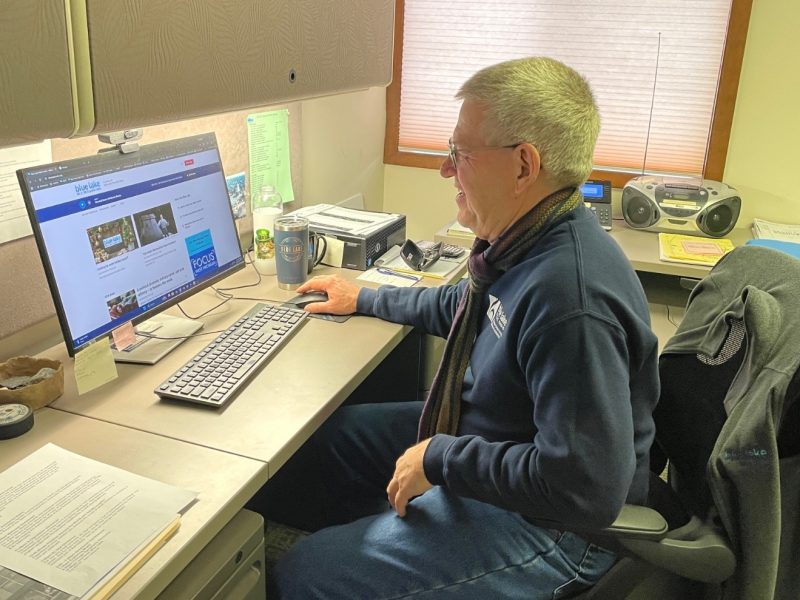
Rural radio station becomes lifeline for West Michigan’s performing arts
Broadcasting from the woods, Blue Lake Radio connects listeners, orchestras, and venues while navigating financial challenges and a shift away from news programming.
Port Huron Historian turns family roots into community action
For more than a decade, David Brooks, president of Friends of the Fort Gratiot Light has helped preserve one of St. Clair County’s most iconic landmarks through volunteer work, fundraising, and hands-on restoration.

LSSU celebrates golden anniversary of famous Banished Words List
The annual list began as a whimsical New Year’s eve party idea in 1976.