Shaggy’s Skis: Growing its custom-ski business in Michigan
The company has gained a cult following in ski communities around the globe.
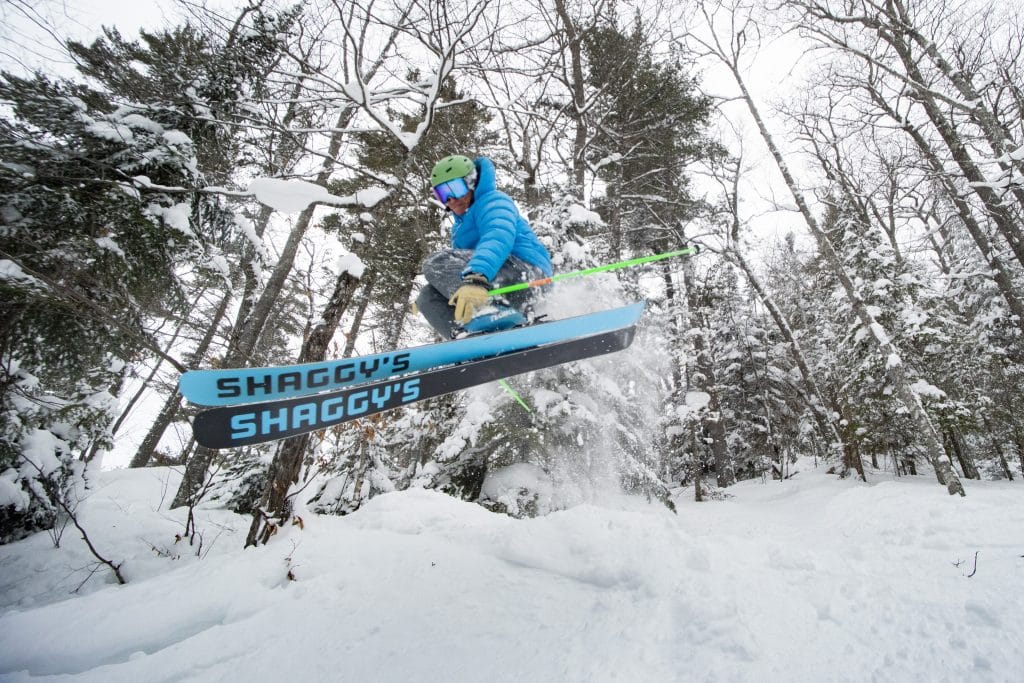
Seventeen years ago, building contractor John Thompson was in South Lyon seeking an alternate career to counter a downturn in the construction market.
Meanwhile, his young sons Jeff and Jonathon — both accomplished skiers — had started a hobby – building custom downhill and back hill skis for friends and family.
That hobby turned into a family affair, with John Thompson leaving construction to help establish Shaggy’s Skis, a custom ski manufacturer. The family moved north from southeast Michigan to Boyne City, outfitting a former Knights of Columbus building into a small factory and headquarters.
Since then, their products have gained traction as well as what John Thompson calls a cult following in ski communities around the globe. Sixty percent of the company’s sales come from the Midwest, but their products have been shipped to clients as far away as Australia, Russia, Japan and Europe.
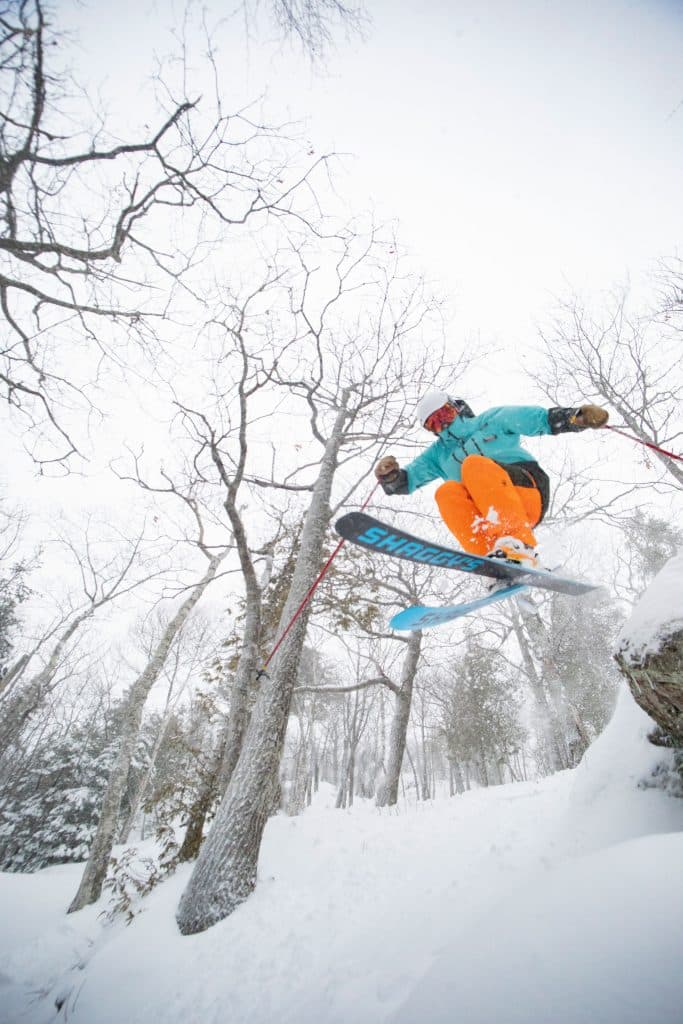
Skiers may best recognize the brand by its visibility at ski areas like Boyne Mountain Resort in Northern Michigan, where staffers work demo stations to encourage patrons to test-ski its many models on the slopes themselves.
The greatest reward of all that? According to 36-year-old Jeff Thompson, now co-founder and lead ski builder, it’s “being part of getting people outside and active and experiencing the thrill of flying down a mountain. We love to hear how someone loves our skis, and how they can do so many new things on them because of their high performance.
“This is not an easy business,” he says, declining to mention sales figures. “And not always the most financially rewarding. But it’s our absolute passion: We truly want our customers to have more fun on the snow than they’ve had before.”
Snow, of course, is important to Michigan’s winter tourism economy, which is drawing a growing number of outfitters and manufacturers to the state’s outdoor recreation industry. Small companies across the state make a variety of winter products, including snowshoes, skis, outdoor apparel, gear and more.
Winter tourism is a major contributor to the state’s overall tourism economy, which generated an estimated $54.8 billion in 2024, according to the latest report from the Michigan Economic Development Corporation (MEDC).
And skiing is a key component of Michigan winter tourism, says Brad Garmon, who is senior strategic advisor & executive director for the Michigan Outdoor Recreation Industry Office (a division of the MEDC). The office was created several years ago to support and grow the outdoor recreation economy in Michigan
Michigan, he notes, ranks second only to New York state in the number of ski areas – the Great Lakes State has about 40 ski areas.
“We show businesses like Shaggy’s as examples of how entrepreneurs can grow and succeed here,” he explains. “If you have an idea in the winter sports place, or a small business with a project you want to grow and expand here, come see us.”
(Snow)plowing ahead with a unique product
Jeff Thompson and his brother learned to ski as small kids, and as teenagers (circa 2005) were creating their own skis using their dad’s tools and workshop.

In 2008, as Jeff Thompson was earning his mechanical engineering degree from Michigan Technological University in Houghton, dad John Thompson and mom Shari sold their home in the lower peninsula and moved north to focus on what would become Shaggy’s Skis. The name honors their ancestor Sulo “Shaggy” Lehto, who hand-carved wooden skis for family and neighbors in Kearsarge, Michigan, a century ago.
John Thompson became co-founder/lead ski builder/member, mom Shari office manager. Capital came partly from sales of John’s construction equipment, though he took additional building jobs while running Shaggy’s.
The owners worked closely on business and market strategy with Michigan’s Small Business Development Center.
Refining the ski-making process took years, Jeff Thompson says, partly because there was little precedent from small companies and scarce information on best practices. The owners designed and built their own tooling for better quality control.
“At first we were in blissful ignorance — we didn’t know what we didn’t know,’ he recalls.
Still today, no labor is outsourced. Raw materials for the skis include hardwoods harvested from Northern Michigan, triaxial fiberglass, copper, carbon fiber and other elements
“It was absolutely slow to start, and 20 years in the making,” he remembers. ”People had no idea who we were, and they wanted to see the product first and try it. We put in 14-hour days.”
Sales saw an uptick in 2015 after several new and upgraded models were released, including a limited-edition ski featuring key U.P. logos: a buffalo plaid background, a pastie, a Stormy Kromer cap and a chainsaw. Boosted advertising also helped. Greater sales allowed for expansion of the staff to eight people.
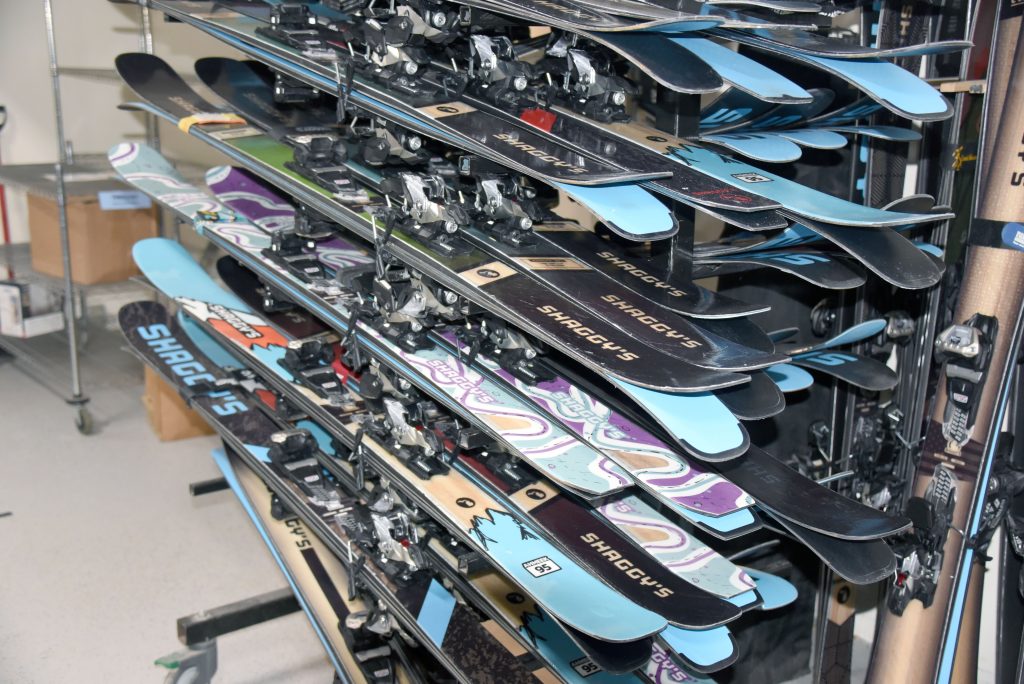
These days, 17 different ski models (in six different lengths) are produced on site. Pre-made products are also available, but the vast majority is built to order with different graphics, sizes, levels of flexibility and other variables.
Shaggy’s typical customer? An experienced skier 45 to 65 years old who “is on the adventurous side and likes to go off the beaten path to keep things interesting.” Men buy more than women, Jeff Thompson notes, and around 12 percent of sales are wholesale.
“A couple other companies in the U.S. do what we do,”’ he reports. “But they’re not really competition; even if you combine us we’re still a drop in the bucket compared to the total ski volume made by the major incumbents”.
One effective marketing tool: Shaggy’s staging of demos at ski facilities across Michigan. At each event, staffers bring along up to 50 pairs of skis for enthusiasts to try out on site so they can compare features.
The family also hosts the annual event “Shaggy’s Family Vacation,” where employees, friends, family and customers gather at Mount Bohemia ski resort in the U.P. for group runs, photo opps, scavenger hunts, games and opportunities for free gear.
“People are finicky about buying skis, and only think about buying them every three years or so,” Jeff Thompson explains. “Some sales are by impulse, but usually we have to nurture. So it’s about the relationships we build, and once people become our customers, we work to keep them happy”.
The greatest challenge of running the business? Its reliance on a decent snowfall and discretionary spending in any given economy. Shaggy’s helps counter both by producing and selling a line of its own pickleball paddles and offering building materials to DIY enthusiasts interested in building skis and snowboards.
In recognition of the state’s help with its business growth, Shaggy’s supported its Pure Michigan marketing campaign by creating Pure Michigan branded skis released last year.
Future forecast? Variable conditions
The company’s five-year plan (“Shaggy’s 2.0”) is in flux because John Thompson plans to retire next year. He says that’s created uncertainty in both sales projections and who will lead production moving forward.
That said, upcoming upgrades may include better automation, more product customization and broader sourcing for renewable materials.
On the plus side, the U.S. ski market could grow due to new government tariffs on products mass-produced in China and the Ukraine.
“Five years ago we purchased our building, so we’ll continue to be here for a long time,” Jeff Thompson says. “But the world is going to look so different in five years, at the rate AI is changing everything. It’s more than we can even predict.”
Related Articles
Kinzer Family Farm offers a quiet, inclusive getaway in Yale
This family-owned farm is a place where families, especially those who may not feel comfortable in public spaces, can spend time outdoors on their own terms.

The Hub behind Southwest Michigan’s next wave of entrepreneurs
Applications are open for the South Haven Regional Business Hub’s 2026 Growth Series, a free 26-week program offering Southwest Michigan small-business owners mentoring, training, and resources to scale and improve long-term success.
Glazed and Grilled: The merger of Cops & Doughnuts and Halo Burger
Cops & Doughnuts famously began in 2009 when nine local police officers banded together to save a long-time business from becoming another boarded-up casualty.