New Life in Old Halls: Transforming Finlandia University’s former buildings for a vibrant future
Most of the university’s buildings have been sold. Some are being renovated into apartments and commercial space. Others will become event venues and a community hub.
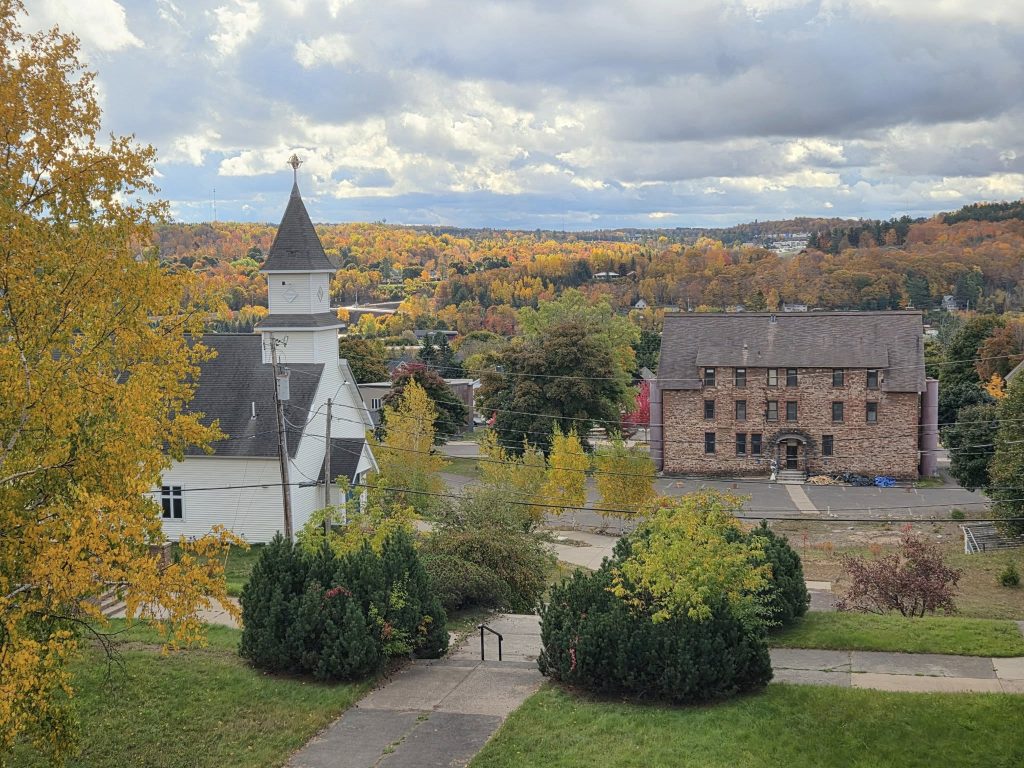
It’s been nearly three years since Finlandia University closed its doors.
For a long stretch, the academic and other buildings dotting its downtown Hancock campus stood sad and silent in receivership, awaiting buyers or bank foreclosure. The U.P.’s only private university, Finlandia’s history stretched back to the late 1800s. Declining enrollment and financial challenges forced its closing.
Now, things are turning around.
Most of the university’s buildings have been sold. Some are being renovated into apartments and commercial space. Others will become event venues and a community hub. The former university cafeteria now houses a ramen restaurant. One building is even being restored into a magnificent private residence.
A community hub
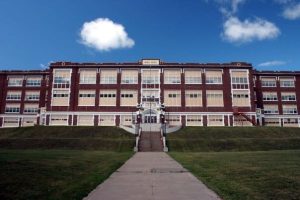
The Hancock Community Hub, in the former Hancock High School building on Quincy Street in downtown Hancock, is among the developments arising from Finlandia’s demise.
Known as Hirvonen Hall once Finlandia University acquired it, the building is being turned into a community hub by Right Start UP, a nonprofit whose mission is to promote the healthy and safe development of children and families in communities. The organization has purchased the first three floors of the building, including the former high school gym and auditorium.

“We really didn’t want to see such a beautiful building just fall into disrepair,” explains Sara Lahti, who is secretary of Right Start UP’s all-volunteer board. “Our goal is to create a community center on the second floor, using the auditorium, the gym and the community room, and then to lease the rest of the spaces to businesses and nonprofits that fit our mission.”
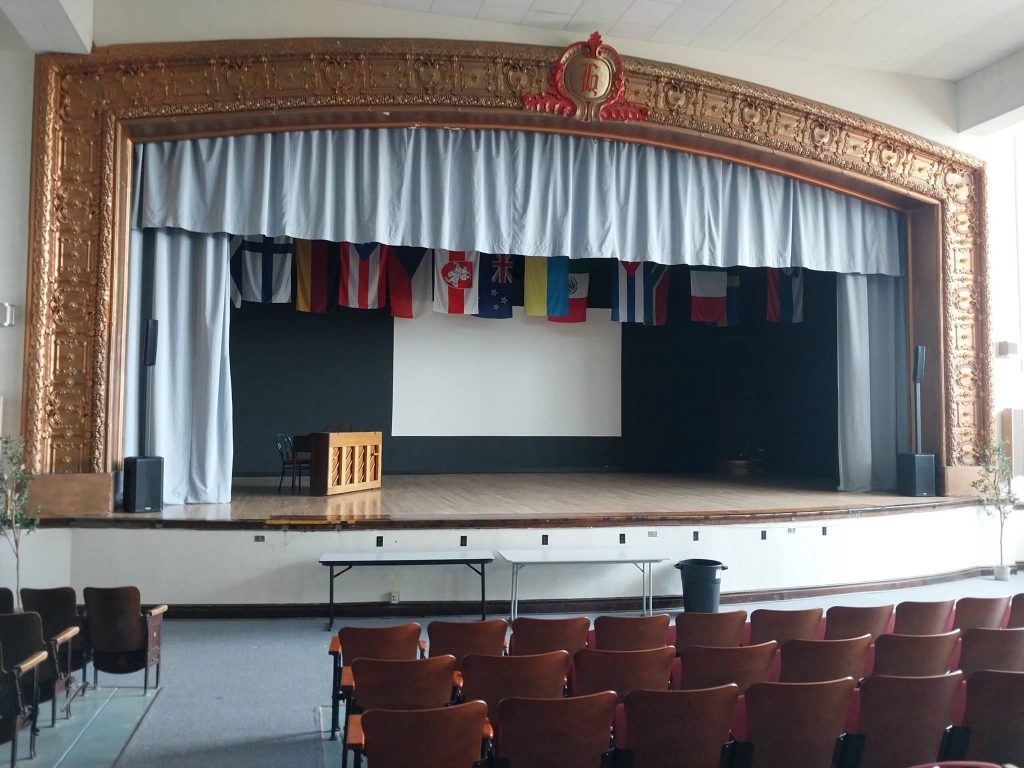
The organization is turning the 700-seat auditorium into the Hancock Community Hub Theater. Using Giving Tuesday contributions, the group is making updates to the stage floor, balcony, sound and lighting systems, projector equipment and curtains. A talent show, “Keweenaw’s Got Talent,” is being planned in April to help pay for roof repairs.
“We want to create a space where people feel like they can come and be part of the community hub,” Lahti says. “They can use the spaces and come together and feel like they are welcome.”
Lahti’s father, developer Mike Lahti (who just died in late December) already owned the top floor of the building, which he renovated and leased to health, wellness and educational businesses and nonprofits, such as Superior School of Dance, a yoga studio, the Keweenaw Community Foundation, Kaleidoscope and Keweenaw CAPE (Community Alliance for Progressive Education).
The Keweenaw Community Foundation (KCF) is a 501(c)(3) non-profit that connects local donors with community needs in the Keweenaw region (Houghton and Keweenaw counties) to improve quality of life, supporting the arts, education, environment, health and economic development.
Kaleidoscope is a nonprofit educational organization offering diverse, hands-on classes and activities for local school-aged kids, focusing on art, STEM (Science, Technology, Engineering and Math), life skills and more, with flexible pricing for families in the Keweenaw area.
Keweenaw CAPE is a nonprofit educational organization that takes an innovative, interdisciplinary, experiential, project-based, student-led approach to learning. It runs an alternative high school called The Hive and offers online classes, athletic camps and hands-on makerspace classes
Accessible child care is one of Right Start UP’s key goals. The former high school woodshop is now home to Gabby’s Guppies, a private child care center run by Gabby Hodges. She calls it a locally owned daycare rooted in community values, offering high-quality childcare with a personal, family-like feel.
“At Gabby’s Guppies, we believe in the power of play, the importance of nurturing care and the magic of childhood,” says Hodges. Michigan Department of Health and Human Services subsidies are available to parents who cannot afford to pay for childcare.
Keweenaw CAPE is partnering with Superior Fab Lab to create a makerspace in the old metal shop. Called the Quincy Garage Makerspace, it’s Hancock’s first community makerspace. A makerspace is a collaborative work space for making, learning, exploring and sharing that uses materials and tools of all kinds. Superior Fab Lab is a nonprofit that provides access to tools and skilled teachers/mentors.
Right Start UP is encouraging partnerships to support their community hub. “Partnerships provide the interconnectedness that enables small groups to achieve large goals,” Lahti explains.
One important partnership is with the city of Hancock, which owns Quincy Green — the expansive green lawn in front of the building. “That’s been a great partnership, because they do so much on the Green, and that brings people to that area,” Lahti says.
Naturally Michigan Properties
A private LLC called Naturally Michigan Properties now owns Old Main and the Chapel of St. Matthew. The company is calling its acquisition Suomi Opisto — the original Finnish name of the college.
“We acquired the buildings to preserve their historic significance and honor the original intentions of the founders of the college,” a company representative told UPword Michigan.
Naturally Michigan Properties bought the chapel first and plans to preserve the structure as a chapel. It will be a venue for weddings, meditation groups and gentle yoga classes, musical performances and community gatherings. One wedding has already taken place there. The chapel can be rented by religious organizations and other spiritually oriented groups.
The chapel will be called Opisto Theatre. Opisto means college in Finnish. Finlandia University itself was originally called Suomi Opisto — Finland College in Finnish.
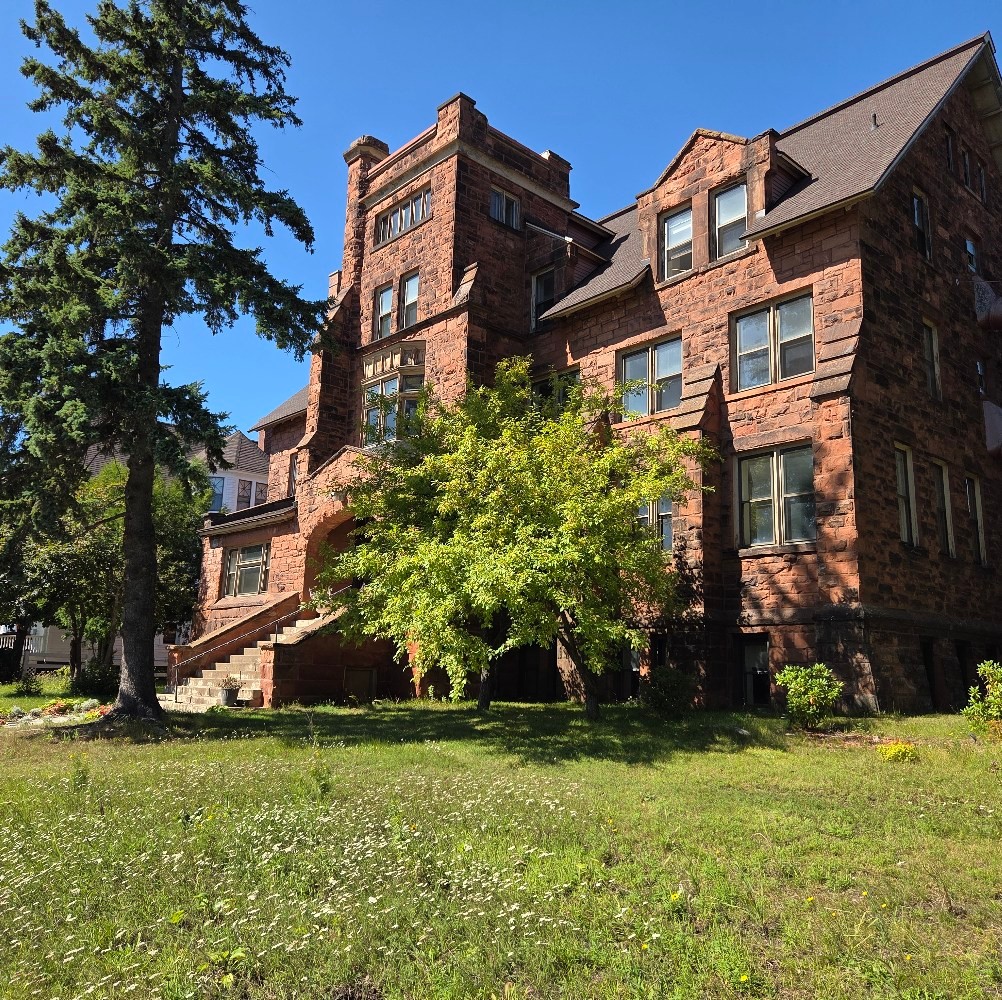
The LLC bought Old Main at auction and is renovating it into an event space and inn for wedding receptions, family or alumni reunions, ticketed events such as tea parties or performances and what the LLC manager calls affinity groups. Ten dorm rooms are being turned into sleeping accommodations for small groups such as wedding parties. There will be an art gallery there too, and eventually, a café.
The building has been renamed Old Main Inn or just OMI. The company hopes to have Old Main Inn open for Heikinpäivä, a Finnish-American winter festival, on January 24.
OMI, listed on the National Register of Historic Places since 1972, is a Richardsonian Romanesque Jacobsville sandstone structure designed by architect Charles Archibald Pearce with stonework by William Scott and carpentry by Bajari and Ulseth. Unlike other residential school buildings, OMI is more like a large family home, with comfortable community gathering spaces alongside intimate rooms.
“With our core values being historical preservation, we are restoring the building to its original condition when it was dedicated on January 21, 1900,” the company representative says. “We are not merely renovating a building; we are reviving an ideal. Our deep respect and admiration for J.K. Nikander, the first president of Suomi Opisto, and the other founders drive our vision.”
Naturally Michigan Properties intends to transform OMI into a retreat center, catering to affinity and family groups.
“Suomi Opisto will serve as the backdrop for specialized weekend and weeklong retreats,” the representative says. “They’re launching a Kickstarter campaign in January to help fund renovations.
“I’ve fallen in love with the building, because I really relate to the founders’ idealistic principles,” the company representative goes on to say. “They were really service-minded, and they were creating an intentional community. In an era before women’s suffrage, Nikander provided women with opportunities for education, enabling them to work outside the home. It was so progressive that it was a co-ed dorm from the very beginning. This progressive spirit will be honored in our halls by a display of Suomi Opisto’s girls’ 1918 basketball team photo.”
The organization isn’t just a business.
“It’s a movement to preserve and enhance our community’s unique character. In the tradition of Suomi Opisto, we’re creating more than just a venue — we’re cultivating a vibrant community gathering place. Our focus is on providing enrichment and culture, emphasizing aesthetics and sustainable living.”
Naturally Michigan Properties also envisions a campus covered with native plants. The company is partnering with SeedKeepers, a nonprofit that promotes environmental conservation, to create a native plant botanical garden in what used to be a parking lot behind Old Main, and have already planted more than 750 native plants.
Other Finlandia buildings
Other former Finlandia properties are being redeveloped too.
The Jutila Center, purchased by Moyle Construction, is now called Skyline Commons. It will house 27 apartments and commercial space. The Michigan Strategic Fund granted a $4.5 million loan to help finance the conversion of the Jutila Center into Skyline Commons.
“Skyline Commons will provide vital housing and modern commercial spaces,” says Andy Moyle, president and head of property development at Moyle Construction. “We’re honored to lead this bold redevelopment, creating a lively hub that will enrich our community for generations.”
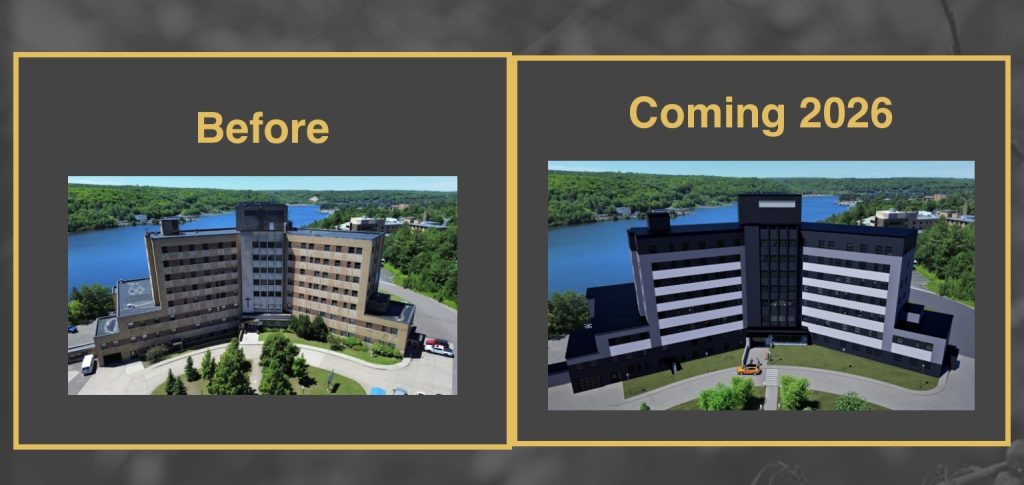
The city of Hancock is in the design phase for renovations that will create a total of 47 housing units in the former Mannerheim and Nikander Hall. The renovations will cost $10 million. The city is still working on plans for other Finlandia buildings, including Wargelin Hall.
Finlandia Foundation National acquired the Finnish American Heritage Center and the North Wind Books store and is working to make them more accessible to the public.
A local developer, Jonathon Nagel, purchased the Hoover Building and is renovating it as his private residence.
So Finlandia lives again, a place that families, businesses and the community can call home. It remains a centerpiece of the landscape of downtown Hancock.
Related Articles
Trails as talent magnet: Outdoor access is key part of West Michigan’s ‘why here’ conversation
Regional leaders note that trails, greenways, and outdoor access are becoming critical to West Michigan’s efforts to attract people and employers and ensure long-term vitality.

Motiv Bowling expansion will bring 90 new jobs and $9M investment to West Michigan
The project will create 90 jobs with starting wages of $24 per hour plus benefits
Little Ortonville goes big for small business
Home to 1,351 residents, village measuring one square mile has a thriving downtown.