
History Reclaimed: How an Iron Mountain construction company saved one of Houghton’s most iconic residences
The Associated General Contractors of Michigan recognized Iron Mountain-based Gundlach Champion for its restoration work on the historic Lambda Chi Alpha house.
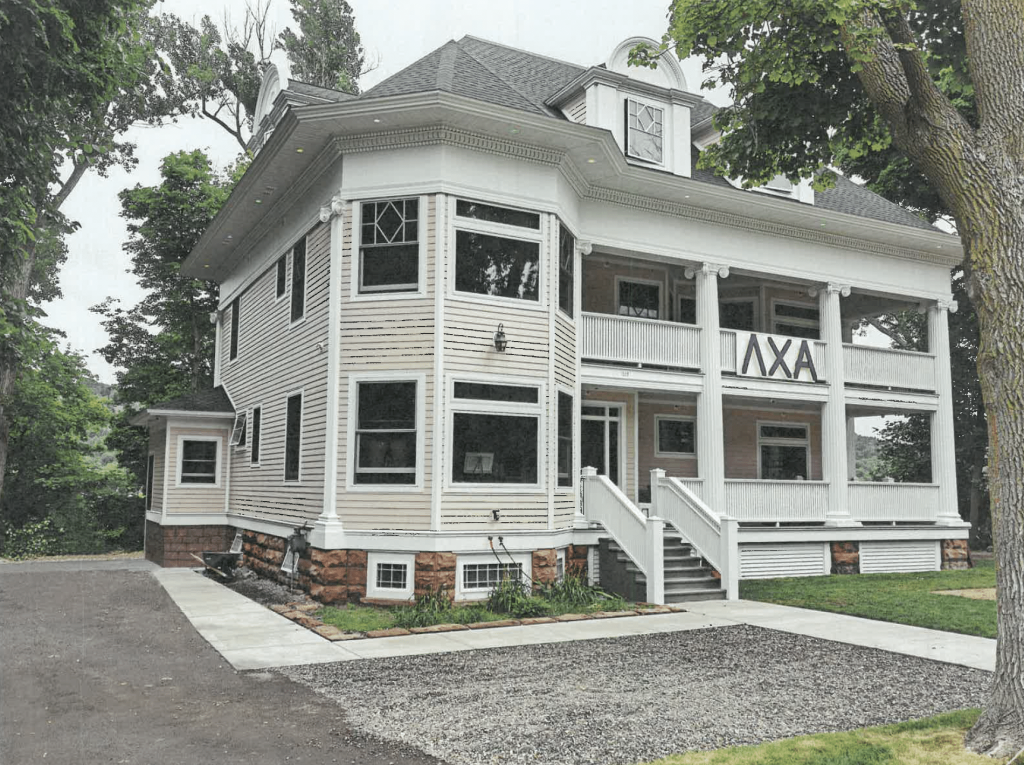
When an electrical fire broke out in the Lambda Chi Alpha house in the summer of 2022, the damage was immediate and devastating. Flames destroyed the roof of the historic building, leaving the lower floors saturated by smoke and the thousands of gallons of water used to extinguish the blaze.
After more than a century at 918 College Avenue in Houghton, the fire left the structure’s viability in question. The work that followed required a level of detail that eventually earned Iron Mountain-based Gundlach Champion one of the industry’s top statewide honors.
Earlier this year, the company received a 2026 Build Michigan Award from the Associated General Contractors of Michigan, recognizing the fraternity house restoration as one of the best construction projects completed in Michigan. Established in 1995, the award is judged by industry peers and typically recognizes only a handful of projects statewide each year.
For Stan Kaczmarek, president of Gundlach Champion, the recognition carries particular meaning. “It’s so competitive,” he said, noting that preparing a submission requires extensive documentation about the project, the challenges faced and the solutions used to overcome them. Because of the rigorous requirements, the company is selective about the projects it chooses to submit.
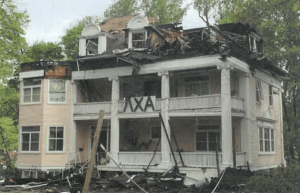
The house itself carries a long and layered history. Built around 1900 for Allen Forsyth Reese, one of Houghton’s prominent early residents, the stately Jacobsville sandstone home served several roles before eventually becoming the Lambda Chi Alpha fraternity house at Michigan Technological University.
The blaze began on the third floor, destroying the roof and leaving the rest of the building severely damaged by smoke and water. Beyond the fire damage, crews had to resolve century-old structural issues, such as columns precariously supported with rock shimmies and wooden wedges, and integrate modern building systems into the original architecture. Before reconstruction could begin in earnest, Gundlach Champion’s first task was to protect what remained.
“It was just to stabilize the building at first,” Kaczmarek said. “A lot of people don’t know that, but that’s all we did.” That early work included securing the structure and installing a new roof to prevent additional damage. Once the building was protected, the possibility of saving the historic home began to feel more realistic. “Once we got the roof on, I think that really helped everybody see that it could be done,” he said.
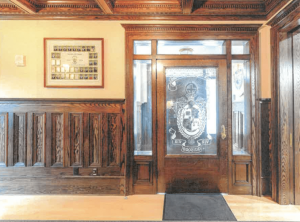
From there, the company worked with the owners to strike a balance between preservation and modernization. Skilled tradespeople restored or recreated many of the home’s defining architectural elements, including intricate woodwork, including a one-of-a-kind exterior cornice, decorative trim, coffered ceilings and the grand staircase that anchors the interior.
During demolition, workers uncovered a surprising detail that deepened the project’s historical significance. Pieces of old lumber and a steel beam bearing the name of the original Herman Gundlach construction company were discovered within the structure.
Original construction records no longer exist, so it cannot be definitively confirmed who built the house. The discovery, however, suggests that Herman Gundlach’s firm may have been involved in its original construction.
For Kaczmarek, it was a bit of a full circle moment. “It was a pretty neat moment,” he said. “To find something like that and think about the possibility that the original Gundlach company built it, and now we’re the ones bringing it back—it really makes you stop and think about the history of it.”
Matching the craftsmanship of the early 1900s demanded a care and meticulousness that Gundlach’s crew was uniquely qualified for. Decorative wood elements were carefully replicated, and historic millwork was reproduced to match the original profiles. The exterior also received a custom touch to honor the project’s roots, with the siding finished in a specially created shade dubbed ‘Gundlach Peach.’ At the same time, the building received modern systems including new electrical, plumbing and fire suppression infrastructure designed to meet current building codes while preserving the balloon-framed structure’s historic character.
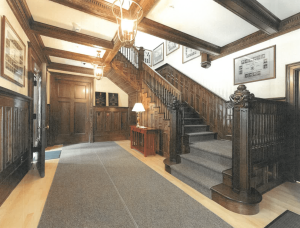
For Marty Gamble, vice president of Hardman Construction, which represented the ownership group, preserving that character was essential. “You can’t rebuild that architecture today,” Gamble said. He said the restoration required a level of collaboration and craftsmanship that is increasingly rare.
“The culture within Gundlach is unique,” he said. “If there’s a job and Gundlach’s involved, I want to be a part of it.”
That collaboration extended across the region. More than 35 local subcontractors and suppliers contributed to the project, reflecting Gundlach Champion’s long-standing emphasis on working with skilled tradespeople and businesses throughout the Upper Peninsula.
Projects like the Lambda Chi Alpha restoration illustrate why the Build Michigan Award carries such weight within the construction industry. Submissions are judged not simply on appearance, but on the complexity of the work, the effectiveness of project management and the ability of the team to overcome challenges while delivering high-quality results.
The honor also adds to Gundlach Champion’s long history of recognized work. In addition to several other Build Michigan awards, in 2005, the company received the national AGC Build America Award for the reconstruction of St. Mary and St. Joseph Parish in Iron Mountain. That project had first earned a Build Michigan Award before advancing to the national competition.
For a contractor based in Michigan’s Upper Peninsula, competing and winning against much larger firms across the state remains a point of pride. Kaczmarek said recognition at that level reflects the strength of the team involved in the work. “We’re proud of the people who make these projects possible,” he said.
But for those who watched the Lambda Chi Alpha house rise again after the fire, the project’s significance carries weight beyond awards. It is a preserved piece of Houghton’s architectural heritage and, once again, a home for MTU students. It’s also a reminder that sometimes history has a way of showing up in the most unexpected places — even in the form of a century-old piece of lumber bearing a familiar name.
Related Articles
Pulp & Press Lit Arts Fest brings world-class authors to rural Southwest Michigan
A new literary festival is coming to Vicksburg this spring, but the idea behind it reaches further than just arts programming.
Building a Legacy: New endowment fund helps secure the future of a popular recreational trail in the U.P.
Marquette residents Bill and Dea Danly worked with the Community Foundation of Marquette County to establish the fund.

Rural radio station becomes lifeline for West Michigan’s performing arts
Broadcasting from the woods, Blue Lake Radio connects listeners, orchestras, and venues while navigating financial challenges and a shift away from news programming.