The Permanent Gift: How endowments are shaping Michigan’s future
Creating an endowment fund allows donors to support their favorite charities for years into the future – often for specific designated purposes.
Two strangers combine financial resources to create a fund that helps rescue animals. A local couple donates money to sustain the quality of their favorite recreational trails. A retired corporate executive commits funds to a Michigan region that’s impressed him with its philanthropic efforts.
One might think U.S. corporations would have the deepest pockets for charitable giving these days, but in fact individuals were again responsible for donating the most dollars to U.S. nonprofits last year – representing a full 66 percent of all philanthropic giving.
As a whole, U.S. residents upped their generosity by 8 percent in 2025 to come up with $392.5 billion in philanthropic donations.
One popular vehicle for such giving is the endowment fund, which allows donors to support their favorite charities for years into the future – often for specific designated purposes. Between 2008 and 2020, one report indicates, the number of endowment funds in the U.S. grew by an average 9.4% annually.
“It’s actually very common for donors to set up endowments with (us),” notes Zosia Eppensteiner, CEO of the Community Foundation of Marquette County. “Organizations work with us because we provide expertise, stability and a lasting impact throughout Marquette County.”
Eppensteiner says the foundation now manages 200 endowed funds, and in 2024 such funds distributed more than $3 million dollars in grant funding back into the county.
Endowment funds do come with tax deductions, but they’re also attractive because some versions allow donors to specify how their money will be spent. By doing so, donors create lasting legacies that align with their passions and interests.
“More clients lately want to ‘vet’ certain charitable organizations now so they know how their hard-earned monies will be spent,” notes Heather Bruce, a Traverse City estate planning attorney who frequently refers potential donors to the Grand Traverse Regional Community Foundation. “I think donors are choosing endowment funds to get more ‘bang for their buck’ and to allow charitable organizations to budget for these gifts over a longer period of time.”

In recent years, endowment fund giving has also been significantly influenced by government cutbacks, reports Mercedes Bowyer, who is director of development for the Grand Traverse Regional Community Foundation.
“The main motivator has been to create sustainable funding for organizations that have been a victim of federal funding cuts or are suffering from a decrease in revenue due to dwindling grant opportunities, aging donors, required capital and infrastructure needs, poor market performance and more,” she says. “Donors want to help support the organization now and forever. Oftentimes, the thought of creating a legacy that will continue to do good things long after the donor is gone is another appealing aspect.”
In the U.S., 10.6 percent of nonprofits reported holding endowment funds in 2020.
A choice of financial legacy
How do endowment funds work?
Typically, an individual, company or organization approaches a 501(c)(3) nonprofit group with the intention of donating money – either for a specific purpose or for general needs.
Setting up endowment funds in honor of loved ones is not unusual, according to Eppensteiner.
Non-cash assets such as stock or real estate can also be used, and any educational, charitable, religious or scientific institution can be the recipient. There are no standard minimum amounts for starting such a fund, though a nonprofit may have to turn down a request if it misaligns with its mission or the group lacks resources to manage the funds efficiently or cost-effectively.
If a donor doesn’t wish to specify a spending target, he or she might donate to a community foundation that will work to identify areas and target areas of need.
“We’ve seen an increase (in unspecified endowment funds) here,” Bowyer notes. “Donors are seeing needs in the community, but don’t normally have the relationship with organizations to see where their gift can have the biggest impact.”
The institution (or its financial agent) then invests the donated money as capital and earmarks the investment proceeds for the agreed-upon purpose.
The benefit to the institution? It foregoes the change to spend the bulk of the money immediately, but instead it grows its long-term financial portfolio. That may help it plan future projects, expand services, reduce reliance on annual fundraising, attract further funding and/or better withstand economic downturns.
The institution (or its designated money manager) is responsible for structuring the investments so they provide profitable returns and they’re legally administered.
A conservative strategy might be to plan for a 4 percent annual return, according to Bowyer. For example, at the Grand Traverse foundation, a $1,000 endowment fund gift generates $40 of annual spending money into the future, and a fund with a $1.4 million balance generates $56,000.
Meeting a number of needs
At nonprofits throughout Michigan, established endowment funds are meeting a number of different needs.
The Elizabeth Lane Oliver Center for the Arts in Frankfort benefits from three endowment funds managed by the Grand Traverse foundation: one targeted for general operations; one for employee health insurance stipends; and one for the center’s Artist in Residency program and adult art education classes. A fourth self-managed fund includes donations made for various specific purposes.
“Those who contribute to endowments … are looking to make a bigger impact with their donations and are typically very engaged with the organization’s success,” notes Tamara Hoffbauer, who is executive director of the Frankfort arts center.
That foundation is also administering a permanent animal welfare endowment created by Traverse City animal lovers (and previous strangers) Anna Taylor and Barb Cross, allowing animal rescue organizations, including volunteer-run groups, to apply for funds to cover services like spaying and neutering, emergency and life-saving veterinarian surgeries, trap-neuter-release programs, foster program assistance, and education.
“I feel good about leaving the planet with something in place,” Taylor explains. “There was no animal welfare fund and that’s where I want my money to go.”
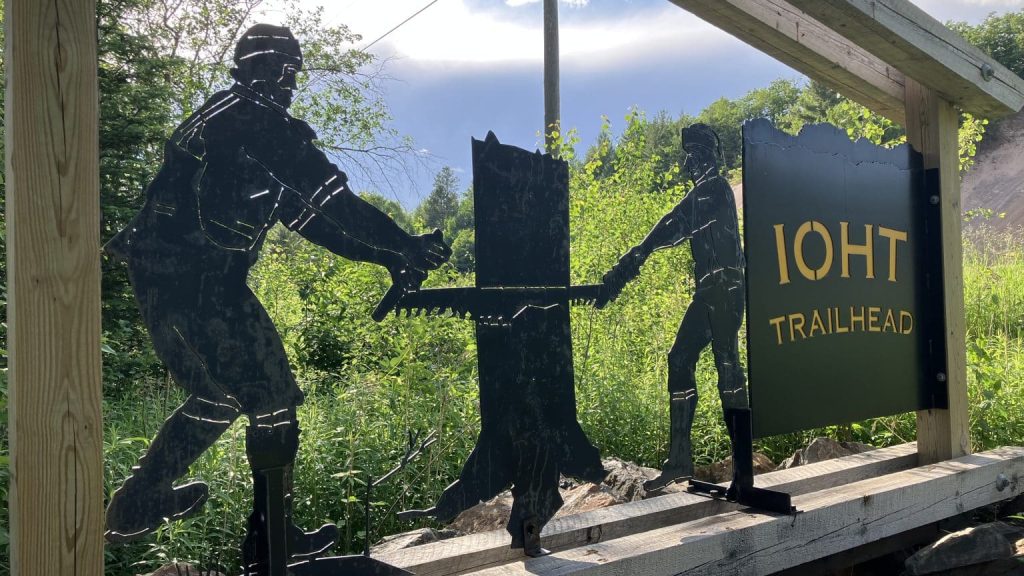
In Marquette County, local residents Bill and Dea Danly created a fund with the Community Foundation of Marquette County aimed at sustaining the 47-mile Iron Ore Heritage trail into the future. Bill Danly attributes the contribution to the couple’s enjoyment of the recreational trail system through the years.
The foundation is similarly managing an endowment fund targeted at maintaining the 150-mile Noquemanon Trail Network in Marquette County, established by Dr. Cary Gottlieb and Dr. Carol Gamber, who donated in honor of late friend Rob Schmeling who often trained for his Ironman Triathlons in the rural U.P.
“It seems like in our community, a lot of people are stepping up and creating long-term solutions to keep our legacy areas available to the public,” says Bob Hendrickson, trail administrator for the Iron Ore Heritage Trail Recreation Authority.
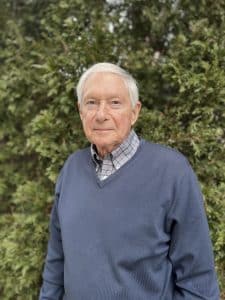
Jerry Ring has seen the benefits of endowment funds from two perspectives: he’s both a donor to and former board director for the Grand Traverse foundation, which serves Antrim, Grand Traverse, Kalkaska and Leelanau counties in Northern Michigan as well as the Grand Traverse Band of Ottawa & Chippewa Indians.
The Jerold and Catharine Ring Endowment is an undesignated fund intended to meet general community needs.
“I take great personal satisfaction that my support of the Community Foundation and other nonprofits in the region helps accomplish what other organizations cannot in terms of assuring an equitable quality of life for all,” says Ring. “We stand on the shoulders of those who came before us, particularly in terms of our quality of life. We should do no less for those who come after us.”
Related Articles
Little Ortonville goes big for small business
Home to 1,351 residents, village measuring one square mile has a thriving downtown.
New Life in Old Halls: Transforming Finlandia University’s former buildings for a vibrant future
Most of the university’s buildings have been sold. Some are being renovated into apartments and commercial space. Others will become event venues and a community hub.
Port Huron Historian turns family roots into community action
For more than a decade, David Brooks, president of Friends of the Fort Gratiot Light has helped preserve one of St. Clair County’s most iconic landmarks through volunteer work, fundraising, and hands-on restoration.