
How one local environmental expert helps protect Michigan’s aquatic systems
As an environmental quality analyst with the state and a volunteer with the Chippewa Watershed Conservancy, Blake Cahill blends science, service, and community engagement to safeguard native ecosystems and reconnect people with the natural world around them.
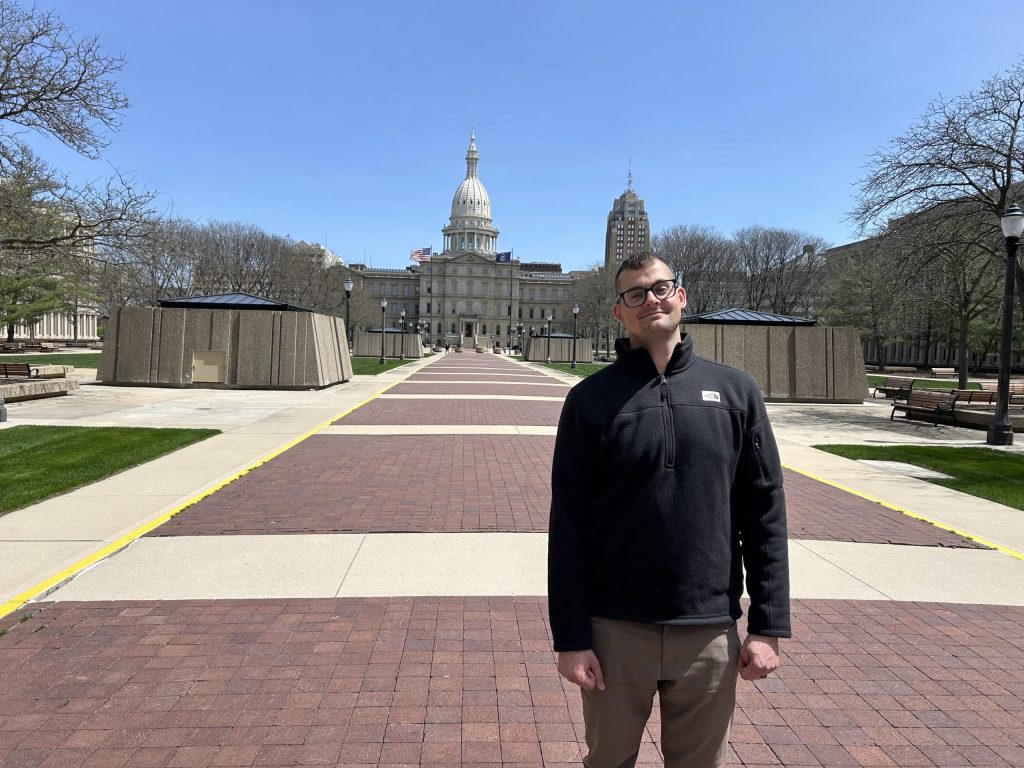
When Blake Cahill goes to work, he does so for many of the usual reasons: for self-fulfillment, to pay the bills, and the like. However, he also goes to work for the sake of posterity.
Cahill works to ensure that Michigan’s wild places provide the greatest good, for the greatest number, for the longest time—enabling current and future generations to enjoy the bounty of Michigan’s wilderness.
Originally from Marine City, Cahill first came to Mt. Pleasant to attend Central Michigan University, staying in the area after graduating. Cahill now works for the State of Michigan Department of Environment, Great Lakes, and Energy (EGLE) as an environmental quality analyst.
In his position with EGLE, Cahill works to maintain the health of freshwater ecosystems by assisting community members with the management and treatment of aquatic plants not just within Isabella County, but throughout the state.
“Michigan has thousands of inland lakes, thousands of miles of rivers and shoreline, and then of course the Great Lakes. That water is super important environmentally but also provides a lot of value to humans, recreationally and economically,” says Cahill.
While Michigan’s waterways are of great importance, Cahill’s professional goals are focused more on the plant species that live in them.
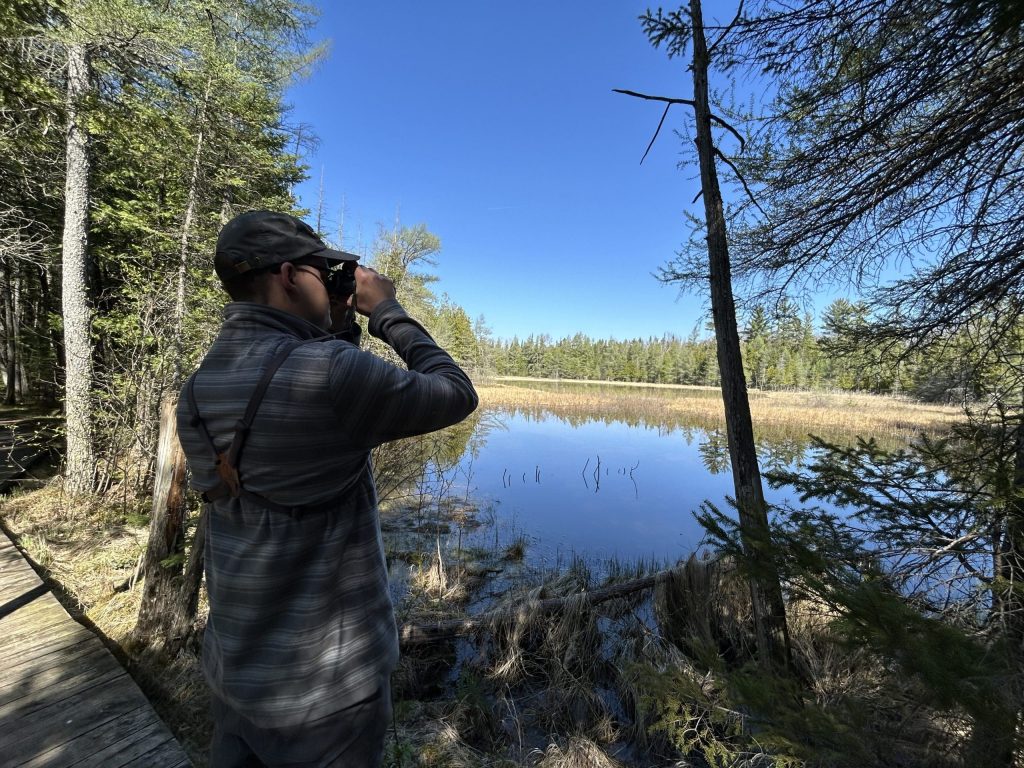
“A key part of [Michigan’s] aquatic systems are many different plant species, and those plants provide a lot of value. They are fish and wildlife habitat, and they also help maintain water quality,” he says.
These systems, however, face an increasing threat to their purity. Certain invasive species have taken root over time, affecting the ability of plants native to Michigan to grow and thrive.
“Sometimes, invasive plant species can reach high abundance and need to be controlled,” Cahill says. “My job with the state is to help shoreline residents and land managers to manage plants that live in the water in a way that meets their needs but is also protective of the environment.”
There is no doubt that the mere existence of wild places merits their protection. However, there is an element that wild places bring to the human experience that cannot be replicated elsewhere. This, too, warrants their continued conservation.
For Cahill, maintaining the connection between nature and society is of extreme importance.
“People are increasingly disconnected from the land around them, and that disconnection can cause significant harm in the long term,” he says. “If people aren’t learning or caring about our natural world, they may not do the work that it takes to protect it.”
Cahill truly lives by the words he speaks; beyond his job in the conservation field, he is heavily involved with the Chippewa Watershed Conservancy (CWC), headquartered in Mt. Pleasant, through volunteer work and as a board member.
“[Working with the CWC] is on the ground, community-level work that gives me the opportunity to engage with people and help them see the beauty of our natural world,” shares Cahill.
On the opportunity that the CWC affords him to blend his professional world with his personal life, Cahill says, “My professional life and my main hobbies, they all have to do with the outdoors and conserving nature. I’m a very passionate person and also mission-oriented. I like to think that my life’s mission can be making any sort of contribution to conserving and protecting what we have.”
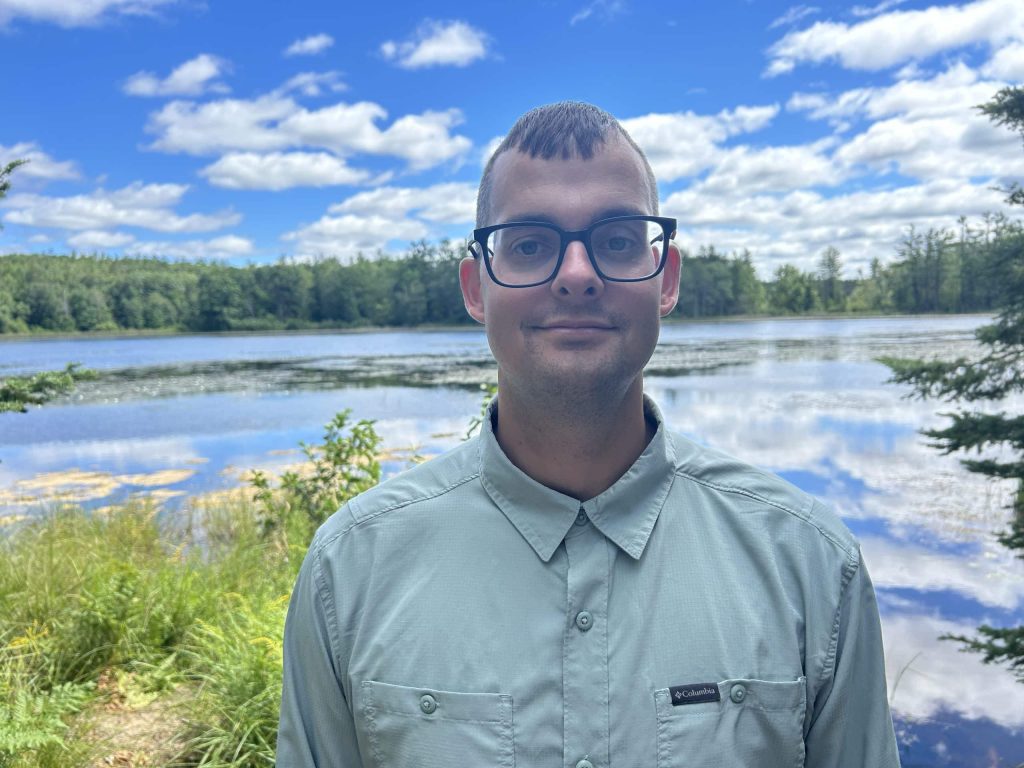
Cahill has certainly made significant contributions to conserving the natural resources of Mt. Pleasant. Cahill and other volunteers from the community have worked alongside CWC leadership, lending labor and expertise that has helped restore the land of several CWC preserves.
“These are pieces of land that have tremendous value. But when they first come into the hands of the CWC, they’re often impacted by different invasive species,” Cahill says on the preserves’ restoration. “For the last several years, we’ve been managing those species and opening up the habitat so that native plants can come back into the area and then also so people can enjoy the preserves for what they are.”
Cahill’s toil has a duality to it—beginning with conserving nature but always circling back to loop in other members of his community who would wish to enjoy it in all its splendor.
“I’m excited about having the opportunity to serve the people in Michigan, and at the same time, helping to protect our environment. Combining those two things is enough to get me up and going in the morning.”
Related Articles
Revolin Sports turns sustainable vision into award-winning Holland pickleball company
From teenage tinkering to statewide recognition, Revolin Sports proves high-performance pickleball gear can also advance sustainability and circular design.
Building a Legacy: New endowment fund helps secure the future of a popular recreational trail in the U.P.
Marquette residents Bill and Dea Danly worked with the Community Foundation of Marquette County to establish the fund.
Grant to township secures Riverside Park preserve along Kalamazoo River
Saugatuck Township receives $2.46 million to protect 119 acres, expand recreation, and preserve rare Kalamazoo River wetlands.