
Hildebrand Fruit Farms doubles capacity with $4 million facility
Funded in part by a $175,000 state agriculture grant, the modernized space replaces a 60-year-old building, nearly tripling the packing floor area and upgrading employee facilities ahead of the harvest seasons.
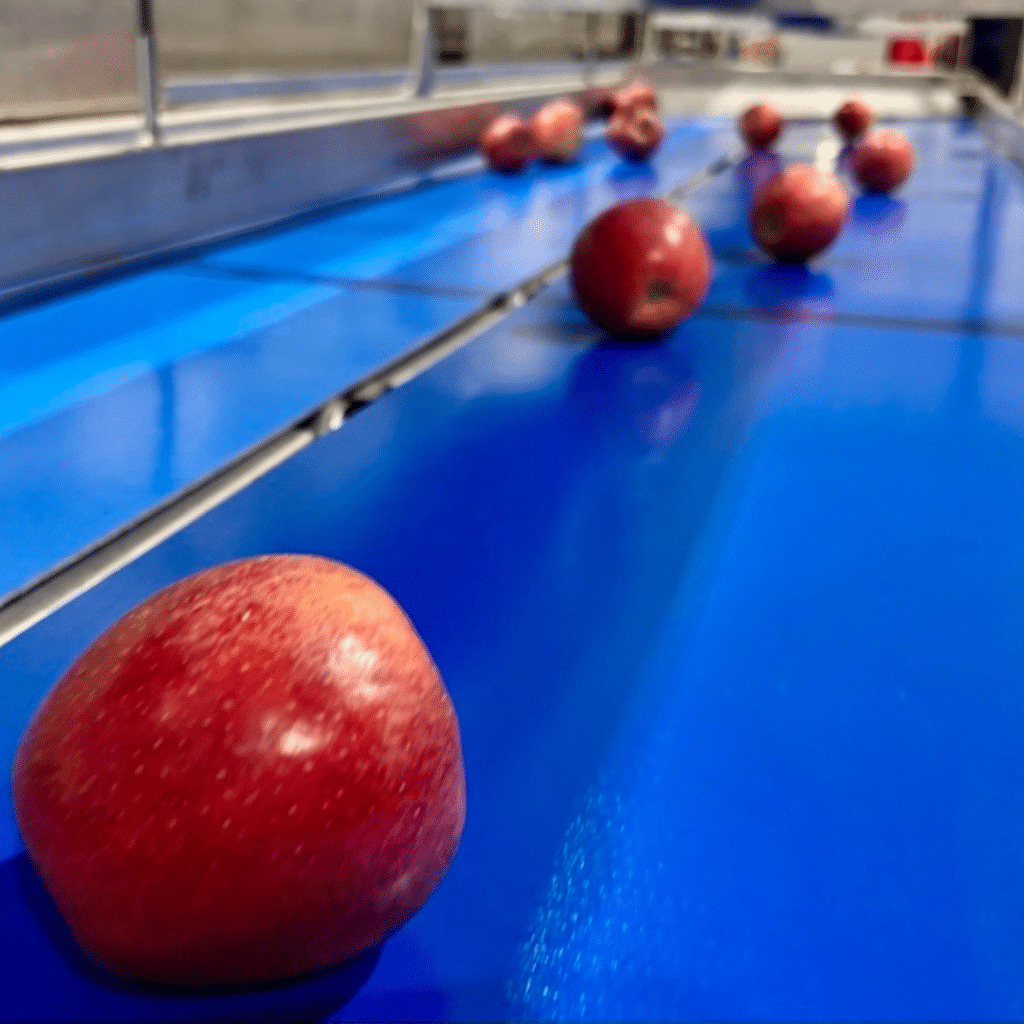
“If you build it, they will come,” Mike Hildebrand laughed the day before cutting the ribbon on a brand-new fruit packing facility that doubles the capacity of his family’s business, Hildebrand Fruit Farms, in Berrien Springs. The project has already attracted new business even before its official opening, he noted.
Established in 1927, Hildebrand Fruit Farms is a fourth-generation fruit farm and packing operation that grows apples, peaches, pears, and other fruits—sourcing half of its volume from its own acreage and the remainder from growers across West Michigan.
“I’ve known [the new grower] for 30 years, but he’s new to our business,” Hildebrand said. “He asked me to pack his crop this year. We talked about it over the weekend and pulled the trigger. So we built the facility, and literally, they came.”
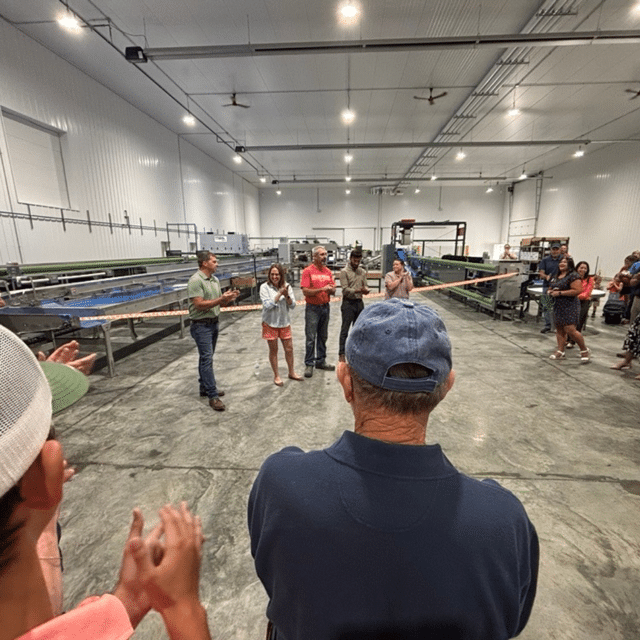
What’s happening: On July 16, Hildebrand Fruit Farms unveiled the major expansion project it first announced last fall. The 23,808-square-foot packing facility modernizes the farm’s 60-year-old building, creating a significantly more efficient layout for the entire operation. The $4 million project was funded in part by a $175,000 grant from the Michigan Department of Agriculture and Rural Development’s (MDARD) Food and Agriculture Investment Program (FAIP). MDARD Director Tim Boring attended the ribbon-cutting ceremony.
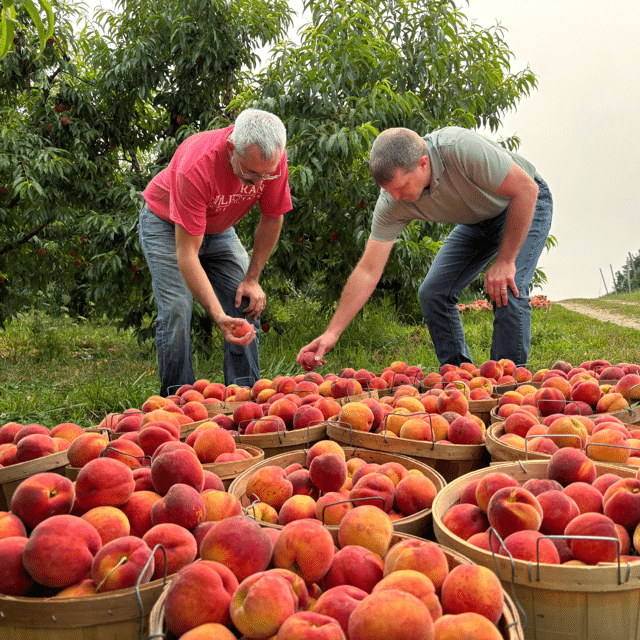
“MDARD is proud to support Hildebrand Fruit through this investment grant,” Boring said. “Expansion projects like the one we’re celebrating today strengthen regional food systems, support jobs, and ultimately drive economic impact. With a rich history and dedication to community, family farms like Hildebrand are the backbone of Michigan’s agriculture industry.”
The back story: The grand opening took place exactly five months to the day after breaking ground. Following site prep and foundation work last fall, crews capitalized on a brief winter warmup. “As soon as the weather broke in the winter—there was a February thaw—the crew showed up with snow shovels, cleared the mud and snow out of the foundation trench, and we started putting walls up,” Hildebrand recalled. “Everything clicked like clockwork. The underground electrical, plumbing, builders, framers, refrigeration team, and roofers all worked seamlessly.”
Hildebrand emphasized that the project arrived just in time for the growing business. “We were simply out of space, and our physical footprint was going to become a limiting factor on our growth,” he said. “This is the finish line for construction, but it’s just the starting line for our company. We will begin packing peaches this Friday.”
The modern facility is a night-and-day upgrade from the legacy space. Offices and break rooms are now fully air-conditioned, employees have ample room to spread out, and the packing floor space has nearly tripled. New workers have been hired to support the immediate peach harvest and to manage increased packing capacity for the upcoming apple and pear seasons.
“We want to be an employer of choice,” Hildebrand added. “We want to provide an excellent environment for people to work, and I think we’ve achieved that.”
The industry impact: MDARD’s FAIP grants serve as a vital catalyst for Michigan’s $125.8 billion food and agriculture sector. The agency has invested nearly $6.5 million in FAIP grants since 2019, forming part of a broader $276 million funding effort over the last seven years to strengthen regional economies and expand access to locally grown foods.
The expansion directly supports a major state commodity. Michigan ranks as the second-largest producer of apples in the U.S., harvesting nearly 1.3 billion pounds annually across 850 family-run farms. The state’s fresh and processed apple sectors generate a combined $142 million annually, complemented by a robust peach industry that yields roughly 24 million pounds worth $19 million each year.
Know your food source: While tree fruits are not associated with recent regional food safety concerns, the state-of-the-art facility opens at a time when consumer awareness around food safety remains high. “It’s important for people to know where their food comes from,” Hildebrand advised. “When you know your farmer and the source, you are better equipped to evaluate the quality of the operation. We definitely check that box here.”
Related Articles
Midland Community Gardens provide for those facing food insecurity
Midland’s community gardens are helping fight food insecurity by growing and donating fresh produce to local food pantries. Powered by volunteers, the gardens provide thousands of pounds of fruits and vegetables to families in need each year.
One year after ice storm, Michigan maple syrup producer back to tapping
It’s been a full year since the ice storm that devastated tens of millions of trees across northern Michigan, including many sugar maples.
From Forest to Pharmacy: Researchers explore maple sap as a lifeline for cancer survivors
Researchers in Michigan and beyond are looking into potential health applications for maple sap.