Beyond the Shortage: How the Caregiver Incentive Project is building a better caregiving industry
The Caregiver Incentive Project povides free training, financial incentives, and support network for caregivers. The nonprofit aims to establish formal job standards, and deliver vital relief to underserved rural families.

People with specialized health needs—from physical disabilities to autism and age-related conditions—rely deeply on family and hired caregivers.
But who protects the caregiver? The job is physically, mentally, and emotionally grueling, and true support is rarely available.
While this crisis ripples across the country, it hits particularly hard in rural and underserved communities.
In Michigan, caregiving is in disarray, says Eric Paad, the founder and head of the Marquette-based Caregiver Incentive Project (CIP), a nonprofit dedicated to ending the in-home caregiver shortage in the U.P. by providing free training, financial incentives, and support networks to caregivers and families.
“One of the main challenges is that it’s not a recognized job,” he says. “There’s no training, no standards, no oversight. People think it’s not a real job. But you’re caring for another human being. That’s as real as it gets.”
Suzanne Sharland-Hemmila, who is COO of the Caregiver Incentive Project, agrees.
“Traditionally, caregivers have been the unseen or in the shadows making things happen, often at their own personal expense, whether that’s financial expense, health expense or occupational respect expense,” she says.
Sharland-Hemmila, who is transitioning to president and CEO of the Caregiver Incentive Project, has worked as a caregiver herself, caring for her recently deceased 89-year-old mother, a retired teacher.
“As I began to pick up where Eric is leaving off, my Mom helped advise me as a cared-for individual while I worked on CIP projects literally at her bedside,” she says.
Training is vital
Proper training for caregivers is a pressing need and an enormous hurdle.
“People seem to think that anyone just knows how to care for someone else,” Paad says. “That’s not true. It takes very special training.”
When he founded the Caregiver Incentive Project seven years ago, one of the first things he did was design a class for caregivers called Safe Hands, where people learn how to help someone transfer from a bed to a wheelchair or how to help them bathe, eat or drink. They learn how to help with toileting, which Paad describes as a special skill.
“You may have lifted the legs of an infant to change a diaper, but that’s not what you need to do for an adult,” he points out.
Caregivers also learn cardiopulmonary resuscitation (CPR), how to use Narcan, a life-saving medication that rapidly reverses an opioid overdose, because people with special health needs sometimes overdose on their medications,. They also learn how to care for someone with Alzheimer’s, how to stay safe while helping the person needing care, and how to protect their own physical, mental and emotional health.
How CIP began
Paad and his wife founded CIP, after spending three years learning firsthand how dysfunctional the caregiver system was.
In 2016, their disabled daughter, Dorothy, decided to go to college. Dorothy, who was born two months prematurely and suffered two strokes before she was born, has cerebral palsy. She was living with her parents, but it would have been an 80-mile round trip drive to take her to classes. So they moved her to an apartment close to her school and started looking for caregivers.
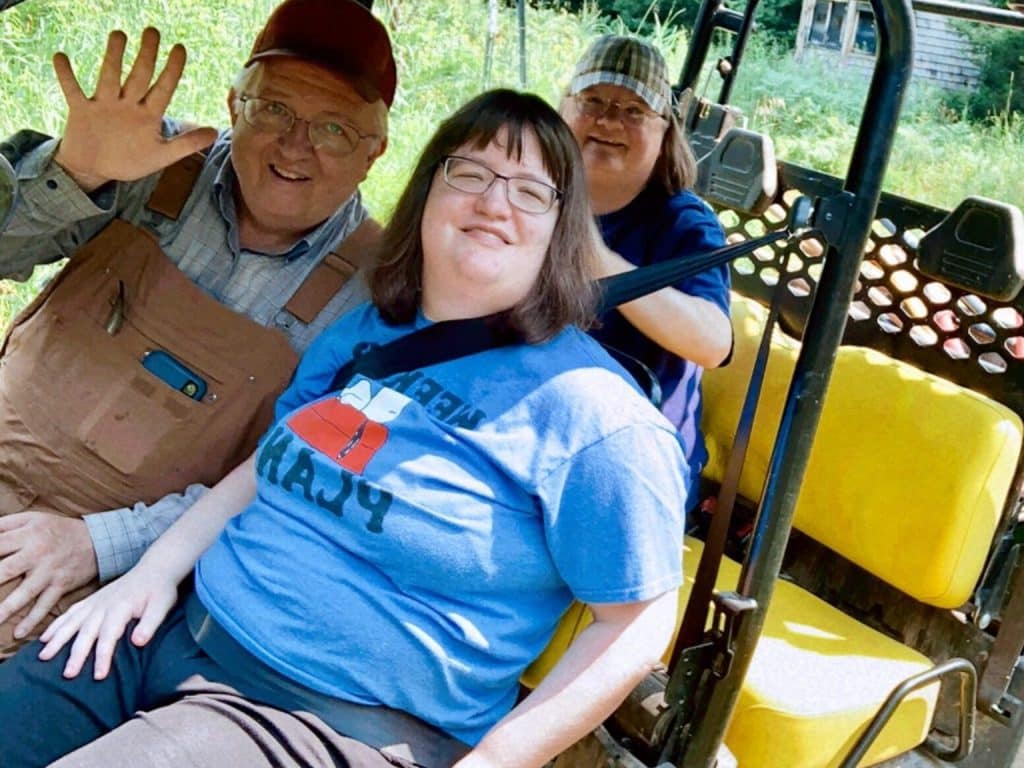
“That’s when, to my shock and surprise, I found out that the care system is very dysfunctional,” Paad says.
The caregivers the family hired were not well trained; they didn’t understand Dorothy’s needs; they were poorly paid (through their agencies). Sometimes they just didn’t show up. And the agencies employing them didn’t seem to care.
Paad got angry. He started talking to the management of agencies who employ caregivers. He discovered that most of them weren’t interested in improving the system.
“They were just in it for the money,” he says. “They told me, ‘This is as good as it gets.’”
There are a few small agencies that are committed to providing high-quality care, says Paad, but they have trouble finding good caregivers.
He turned to lawmakers in Lansing, who set the reimbursement rate for paid caregivers under Medicaid. The hope has been that the companies will pass the money onto caregivers but there is no oversight.
“Lawmakers need to set some basic requirements, and then an independent agency should oversee this operation, one that doesn’t have ties to the care companies,” Paad says.
Now, Paad and his wife are their daughter’s full-time caregivers. Paad spends the week with her, and his wife takes over on Friday night and spends the weekend.
“This is a crisis,” he says. “What’s a person to do who needs help eating or going to the bathroom when their poorly paid, untrained caregiver just doesn’t show up? We have to do something.”
A collaborative effort
CIP partners with a number of community and statewide organizations to expand the impact of their work, CIP’s Sharland-Hemmila says.
Among them is the IMPART-MSU Alliance. The Michigan State University-based organization’s goal is to build a skilled workforce, develop training programs and forge partnerships with agencies that provide in-home care.
Other partners include Trillium House, Lake Superior Life Care and Hospice, the Michigan Health Endowment, the Superior Health Foundation, AARP, the West End Health Foundation, and Northern Michigan University’s Rural Health program and its School of Nursing.
CIP recently surveyed and trained 180 West End Health Foundation caregivers on core caregiving skills such as safe transfers, self-care and basic CPR.
The survey asked the caregivers about their experiences and also invited the cared-for to share their experiences.
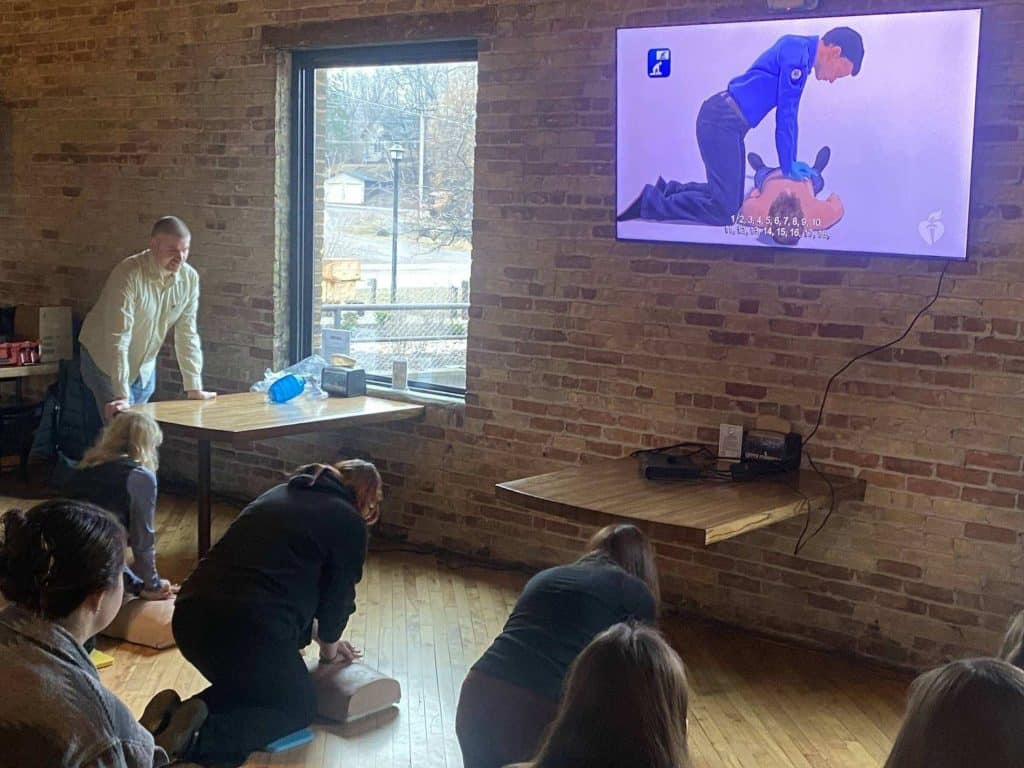
“We had so many caregivers willing to share experiences that we collected just under 300 data points,” Sharland-Hemmila says.
Trillium House is a non-profit Marquette hospice that provides professional care for people approaching death and support for family caregivers.
“We support family caregivers through respite services, guidance and compassionate support during difficult transitions, says Melissa Cavill, who is executive director of Trillium House. “We also invest in our professional caregivers through continuing education, specialized training, leadership development and resources that promote employee well-being and retention.”
Lake Superior Life Care & Hospice is another Marquette non-profit that provides palliative care for patients nearing the end of life and support for their families. Its well-trained, professional staff offer physical and emotional care both in patients’ homes and residential settings.
U.P. Home Health & Hospice, with a five-star rating from Medicare, provides home health and hospice services in Marquette and Ishpeming. According to its website, its philosophy is empowering people to live life to the fullest.
The Caregiver Incentive Project has worked with all three organizations, whose staff has benefited from their training. Dorothy Paad volunteers at Trillium House. The hospice provided respite care for Sharland-Hemmila during her mother’s final illness. U.P. Home Health & Hospice provided hospice care for her mother before she died in September.
Who pays the bills
Paad started CIP with his own funds. Grants and donations have kept it going.
This year, the organization has received grants from the West End Health Foundation, Blue Cross Blue Shield Michigan Foundation, Superior Health Foundation and United Way of Marquette County.
The nonprofit is seeking funding to reactivate a scholarship program to help caregivers get professional training as nurses or social workers. Its Success Fund, which provided funding for caregivers to deal with emergencies such as car repairs, is also dormant and seeking new financial support.
Paad and Sharland-Hemmila hold on to hope that these initiatives can become active again.
“We hope we can continue to train caregivers on the core skills needed and continue to build more training based on requests for special classes such as caring for those living with dementia, pain or PTSD,” Sharland-Hemmila says.
Continuing the Success Fund, she says, would help caregivers arrive at the workplace safely and ready.
“We hope to continue to build communication tools to improve health outcomes and cared-for relationships. And we hope that by continuing to work collaboratively locally, statewide and nationally, we can improve the caregiving situation for both the caregivers and the cared-for.”
The need for well-trained, reliable caregivers and support for family caregivers is not just a problem facing a small segment of society.
“No matter who you are, what your background is, or where you live, one fact is almost guaranteed in this life: you will be affected by caregiving,” says Paad. “It’s not a question of if, but when.”
Related Articles
Michigan’s community mental health system: Overcoming stigma to provide needed care
Community mental health has played an important role in shifting the culture to asking for help.
St. Clair and Sanilac county leaders identify barriers to expanding rural mental health care
Behavioral health leaders in Allegan, Sanilac and St. Clair counties say flexible service models, regional partnerships and start-up funding could help more rural communities expand access to care.

How are Michigan’s families doing?
Rising costs, child care shortages and barriers to health care are straining Michigan families. What could help?