The Art of the Harvest: Cultivating community through farming and creativity
Traverse City-based Crosshatch has been working since 2005 to create thriving rural communities rooted in vibrant culture and strong farming economies.
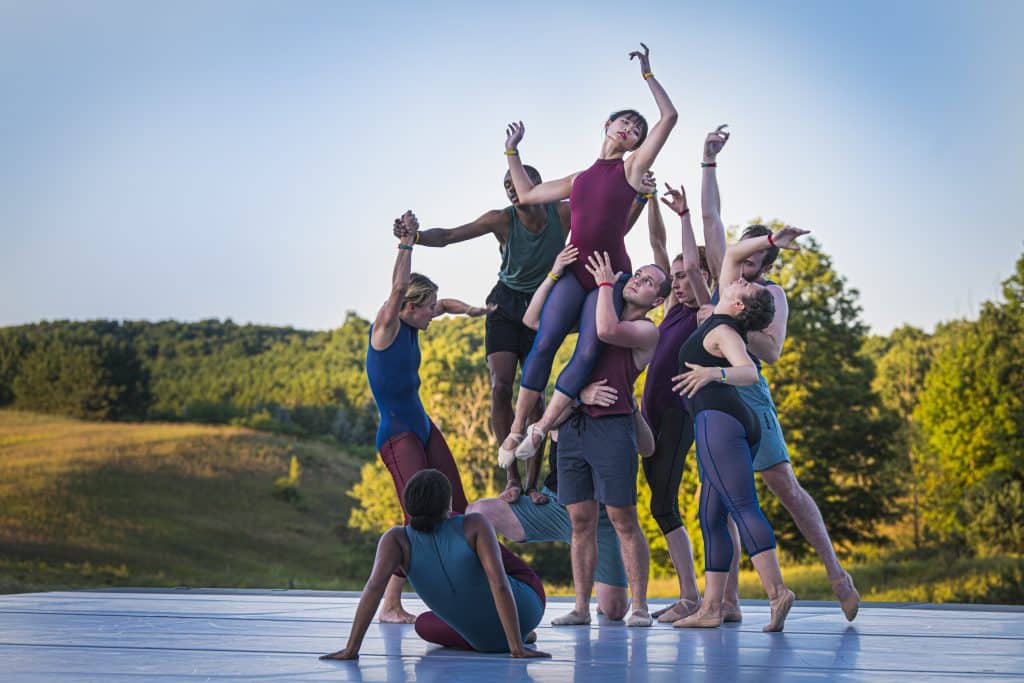
Arts and agriculture may seem like completely different realms – especially when it comes to community-building – but one non-profit in Northern Michigan is bringing them together. Traverse City-based Crosshatch has been working since 2005 to create thriving rural communities rooted in vibrant culture and strong farming economies.
“[It’s about] what makes those communities places that people really love to live in,” said Brad Kik, who co-founded and co-directs the organization with his wife Amanda Jones Kik.
Crosshatch’s offerings range from artist residencies to farming microloans and guilds to community performances and workshops across a 10-county area. They are also co-owners of Alluvion, a community arts and events space inside Traverse City’s Commongrounds co-operative space.
The organization is largely funded through grants, with some support from individual donors, corporations and ticket sales.
Steve Wade, vice president of community impact with Grand Traverse Regional Community Foundation, a Crosshatch supporter, said the organization is unlike anything else he’s seen.
He said one of his most memorable Crosshatch projects that the foundation supported was a program that helped farmers to learn about and reduce their carbon footprint. Another memorable project provided relief funds for farmers affected by last year’s ice storm in Charlevoix County.
“They are sort of guarding a flank of our community, and not just guarding it from a protective standpoint, but saying, ‘How can we make it better, what can we proactively do to strengthen this in our community?’” Wade said.
The idea for Crosshatch came about when the couple first met in Bellaire and began dating. Brad came from an ecological background with experience in environmental activism and regenerative farming. Amanda was an artist with a focus on painting, installation and writing. Both, though originally from suburbs, enjoyed rural life and wanted to use their skills for a greater good.
Amanda said she wanted to fill the gap left by the National Endowment of the Arts during the Culture Wars of the 1990s that cut funding to individual artists.
“Artist residency programs are this way to directly support artists, and I think it’s really lovely,” Amanda said.
She also wanted to increase access to the arts in rural communities, which she said are often overlooked and underfunded.
Brad wanted to counter the farming succession problem and support Michigan’s overall agricultural industry, which is one of the most diverse in the nation.
“How people take care of the land and how people understand how to take care of the land are really important to how rural communities survive,” he said. “Farmers are right on the leading edge of that.”
The challenge was how to combine their two passions under one umbrella.
They started with community meetings, asking locals about their interests and obstacles, where they learned two key takeaways: first, people were craving personal connection and, second, they wanted to develop more hands-on skills, and the foundation for Crosshatch was born.
One of their current arts programs is the Long Memory Project, which pairs resident artists with community elders who spend a day sharing their stories around a specific theme, including topics like activism, LGBTQ pride and farmland. The artists then create work based on those stories, which has resulted in paintings, photography, ceramics, live performance and fashion.
“It’s less about the archive of the stories and more about really the transmission of the stories from one generation to younger generations … these stories would probably otherwise be lost,” Brad said. “Elders are so used to being ignored and are just so gratified. It feels incredibly powerful just to be seen and heard and respected for the work that they had done in their earlier days.”
One of the organization’s most influential arts programs was its Hill House Artist Residency, which took place from 2010-2018. The program allowed individual artists to spend two to four weeks isolated in a cabin in the woods near East Jordan to focus solely on their work, with food and other necessities provided.
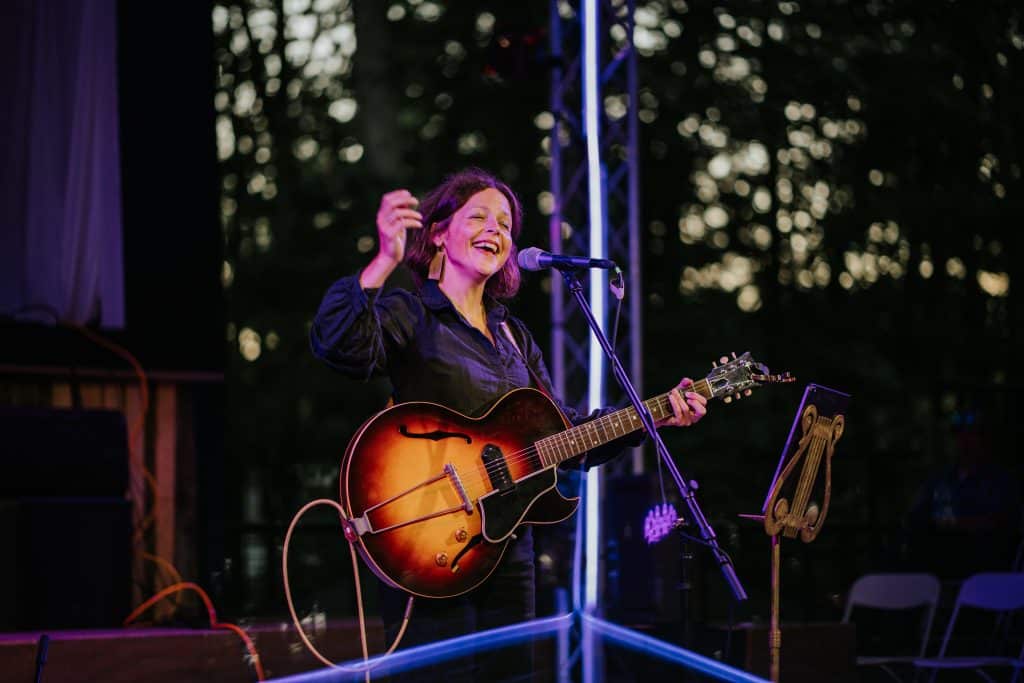
Toronto folk musician Abigail Lapell participated in the residency three times, starting in 2012. She has since won the 2017 Canadian Folk Music Award for Contemporary Album of the Year. Last year, she was nominated for Contemporary Roots Album of the Year at the JUNO Awards, the Canadian equivalent of the Grammy Awards, and tours full-time.
She said the residency was life changing.
“That was the beginning of being on more of a professional path of my career where I was able to take the time and space to just create,” she said.
Other Hill House alumni have included Grammy Award-winning musician Alex Wand, installation artist and sculptor Scott Hocking, Liam Robinson, music director for the Tony Award-winning musical “Hadestown,” and singer Joshua Davis, who performed on “The Voice.”
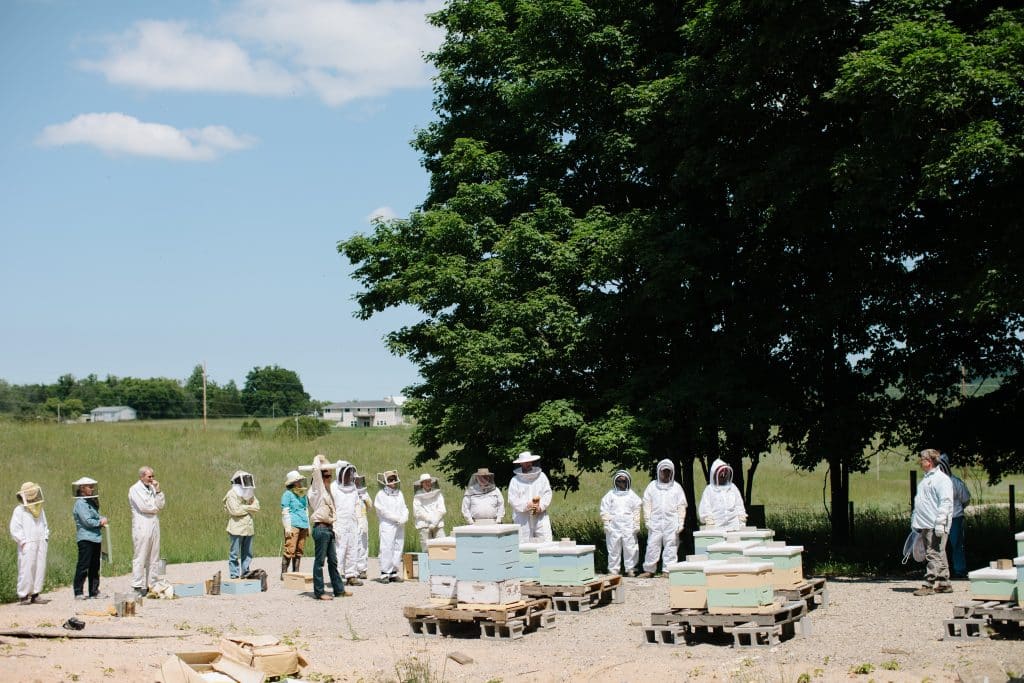
On the agricultural side, Brad said it was important to create ways for farmers to connect, share knowledge and support each other to solve problems, so they started the annual Northern Michigan Farmers Conference, farmer-to-farmer learning programs and guilds. They also developed a microloan program, funded by Oryana Community Co-op, that provides zero-interest loans to farmers for more than 10 years.
Nicole and Zachary Mezeske, who own Bear Lake’s Z&N Farm, received two of those loans. The first was for $10,000 and allowed them to build a farm well – separate from their house well – which Nicole said had a significant impact sustaining and growing their farm, especially during drought years. She said they also received a $6,700 grant to expand their greenhouse, which contributed to them being able to double their greenhouse capacity within one year.
Their participation in the annual Northern Michigan Small Farm Conference also proved fruitful. In early 2020 – right before COVID hit – the couple attended the conference and learned how to implement an online store, which became crucial when the pandemic arrived shortly after.
“Putting farmers together, putting peers together can really make such a huge impact,” Nicole said. “[Crosshatch] just has a great way of connecting people and connecting people to the right resources that they need.”
Up next, Crosshatch is returning to its Bellaire roots and will open the Crosshatch Meeting Place + Mercantile downtown, expected to open in late spring. The space will sell farm products, art and artisanal goods as well as coffee and local food. It will also serve as a community gathering space with workshops, performances and other events.
Eventually, the couple wants to open a joint working educational farm and artist residency that will fully combine their mission.
“[Crosshatch] really is about how we get people, not just learning something new, but learning something new alongside their friends and neighbors and…in such a way they would want to start a project with [them]…,” Brad said. “Those [are the] kind of community-based projects we want to scaffold and support.”
Related Articles
MSU Names De Grins Oer Dairy 2026 Dairy Farm of the Year
The award recognizes farms that demonstrate excellence in management, innovation and leadership within Michigan’s dairy industry.
New Michigan program aims to help farms continue by connecting buyers with sellers
MIFarmLink helps match aspiring farmers with those looking to retire and hand their operations over to the next generation.
Join the 2026 MSU Regenerative Agriculture Series
The six-session virtual series is designed to support farmers, landowners, conservation partners and agricultural professionals in advancing regenerative practices.