
$2 million federal grant boosts Benzie and Grand Traverse trail infrastructure
A $2 million federal investment in MDOT projects will pave the final stretch of the historic Betsie Valley Trail in Benzie County and expand Grand Traverse County’s 3-Mile Trail network, driving regional transit and economic growth.
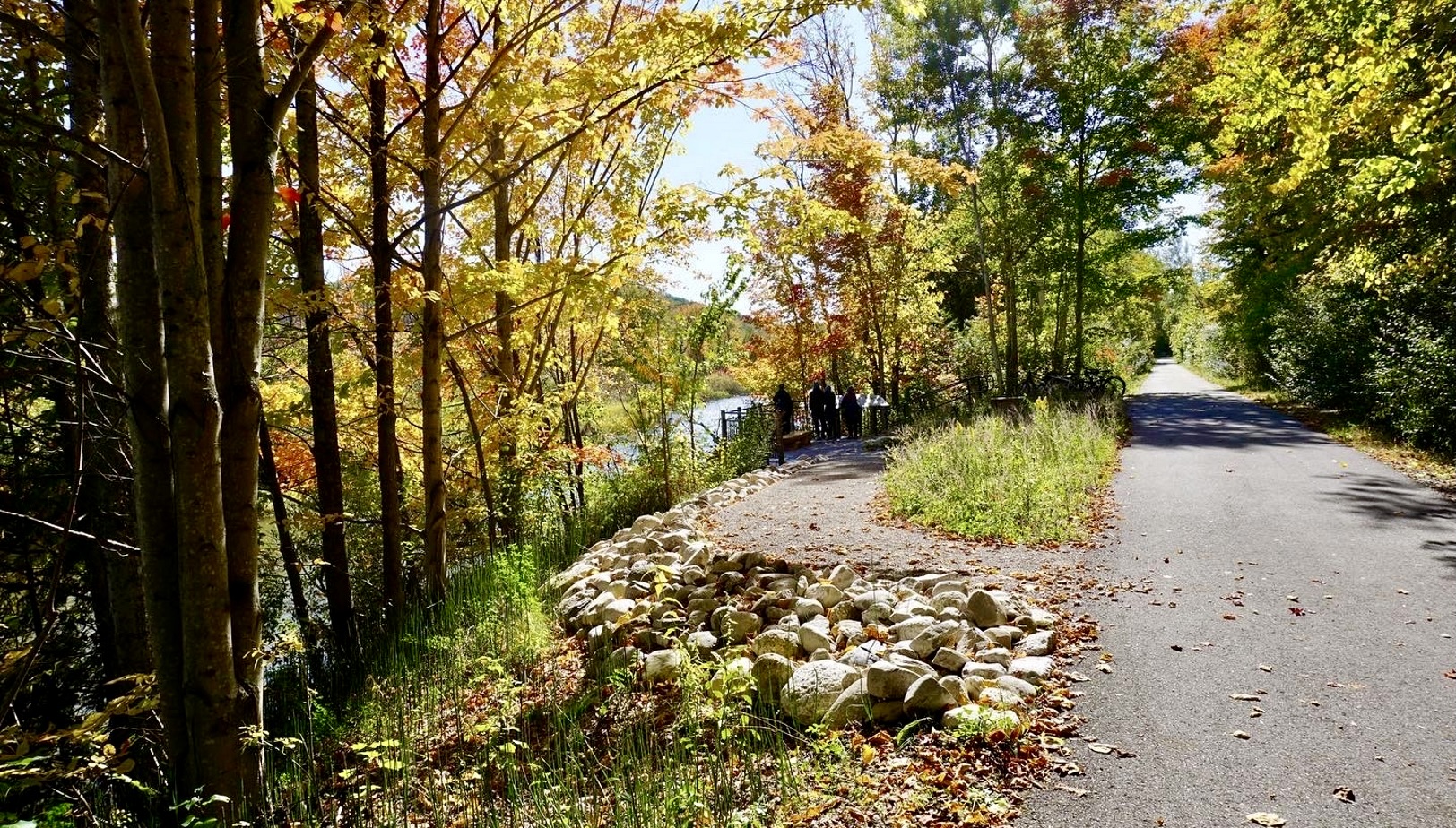
Great news for outdoor enthusiasts in Northern Michigan: the region’s trail network is getting a major upgrade, thanks to a $2 million federal investment in Benzie and Grand Traverse counties.
The Michigan Department of Transportation (MDOT) announced the funding through its Transportation Alternatives Program (TAP). The federal dollars will expand outdoor access, encourage healthier lifestyles, and boost local economies across both counties.
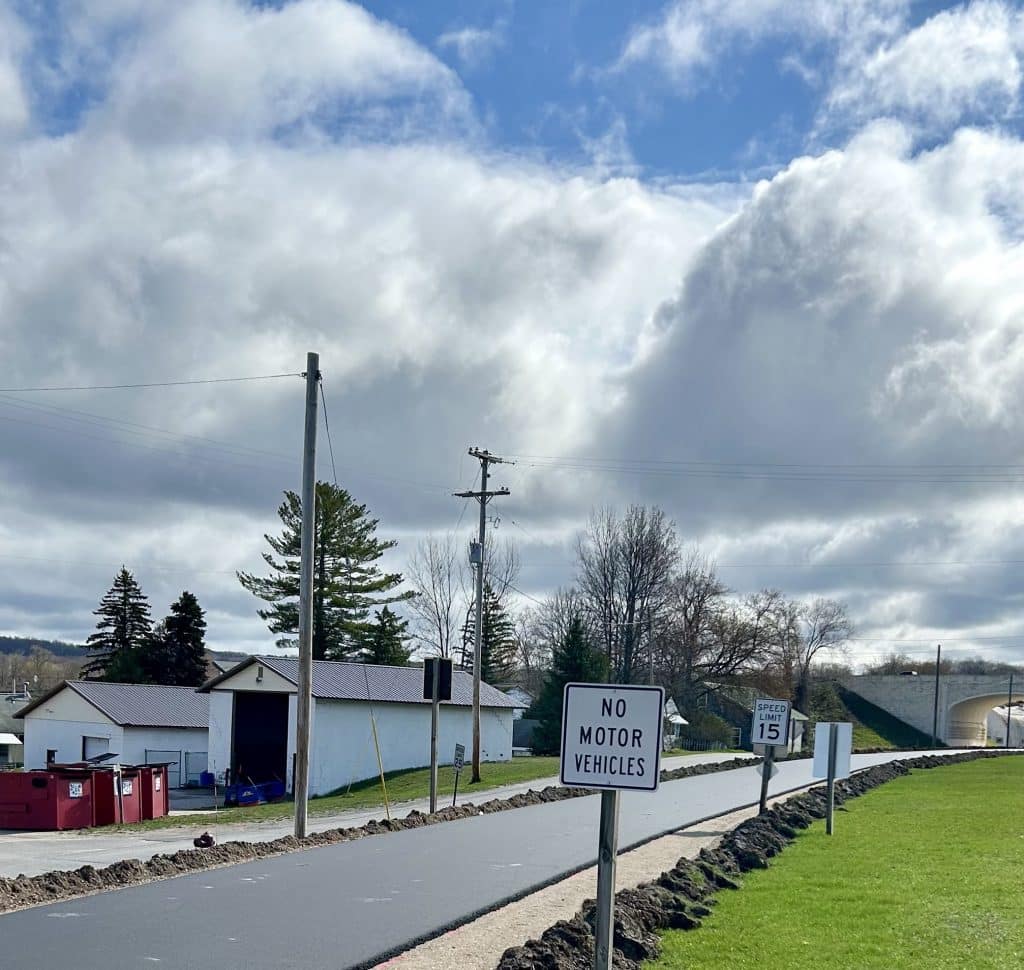
A $1 million grant awarded to the Benzie County Road Commission will pave the final 4.1-mile segment of the Betsie Valley Trail in Weldon Township.
This project marks the finish line of a 30-year dream to convert the former Ann Arbor Railroad bed into a continuous 22-mile trail linking Frankfort, Elberta, Beulah, and Thompsonville. In Weldon Township, the trail winds through the Pere Marquette State Forest, taking visitors over a restored railroad bridge and past the ruins of a 19th-century hydro turbine.
Paving this final section will make the entire stretch fully ADA-accessible, opening it up to families with strollers, wheelchair users, cyclists, and walkers of all mobility levels.
“Once complete there will be a fully accessible trail from Beulah to Thompsonville,” says Jim Gribble, a member of the Friends of the Betsie Valley Trail. “We look forward to the continued development of Thompsonville as a hub for non-motorized transportation throughout northwest lower Michigan as it once was for rail when two major rail lines crossed there.”
Revitalizing Thompsonville Junction
The newly paved path leads right into Thompsonville, where a sister project led by the Thompsonville Area Revitalization Project (TARP) is transforming the village’s historic railroad hub at George W. Sharp Park into a modern trailhead and campground.
“136 years ago, a railroad junction was carved out of the primal forests at this very location,” Charles Kraus, president of the TARP board, said in a previous Rural Innovation Exchange story. “That junction significantly impacted the growth and prosperity of Northwest Michigan and the Thompsonville area community in particular.”
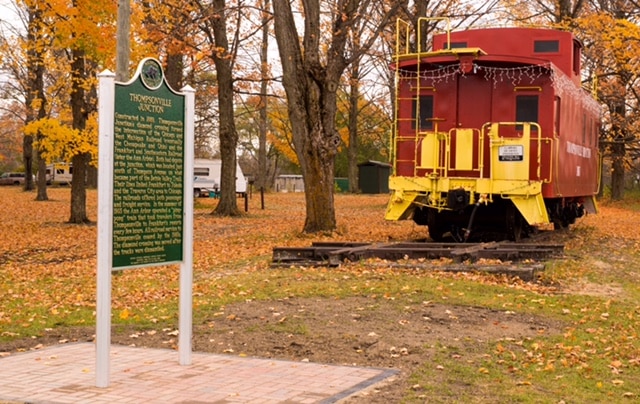
The efforts are positioned to revitalize that once bustling community of Thompsonville, population 450, which in its heyday was a lumbering hub and railroad junction of two main freight and passenger lines. Today, the Benzie County village is home to the Crystal Mountain resort.
Phase one features a brand-new visitor pavilion equipped with bike racks, a repair station, water bottle fillers, and restrooms. Paved walkways and new landscaping will highlight historic sites, including a state marker, a restored red caboose, and the original “diamond” rail intersection where two major train lines once crossed.
Phase two will upgrade the adjacent rustic campground into a modern, 10-site seasonal facility with 50-amp electrical hookups, showers, and ADA-compliant concrete pads. Funded through additional grants from the state and local foundations, the full trailhead and campground are expected to open by 2027.
Connecting Grand Traverse County
Further east, the Grand Traverse County Road Commission was awarded $1.02 million for Phase 2 of the 3-Mile Trail in East Bay Township.
This project will build a dedicated paved pathway and boardwalk system. Designed to link seamlessly into the region’s 100-plus-mile trail network, Phase 2 will connect to Phase 1 of the trail (scheduled for 2027 construction) and a nearby Safe Routes to School project (slated for 2026).
According to the TART Trails website, closing these critical gaps will give local residents safer, foot- and pedal-powered access to neighborhood schools, local businesses, job centers, and natural areas.
By turning historic rail lines into accessible, community-focused pathways, both projects show how targeted investments can honor local heritage, support green transportation, and bring new visitors to Northern Michigan.
Author

Related Articles
Preserving the Great Outdoors: Millions targeted for state parks and public lands
Michigan’s state parks and public lands benefit from millions of dollars in the state’s 2027 budget and millions of dollars in Trust Fund grants.
Michigan’s first-of-its-kind endowment rewrites the rules of forest conservation
The Michigan Department of Natural Resources partnered with the Grand Traverse Regional Community Foundation to establish a first-of-its-kind $670,000 stewardship endowment.
Isle Royale Heritage Alliance formed to scale up historic preservation
The newly formed Isle Royale Heritage Alliance, coordinated by the National Parks of Lake Superior Foundation, has launched a formal partnership to scale up the volunteer-driven preservation of Isle Royale National Park’s historic cabins, fisheries, and lighthouses.