Chasing Ice: Unpredictable trail and big crowds await racers at the annual Iceman Cometh
Driven by a vibrant community spirit and an unpredictable course, the annual Iceman Cometh Challenge brings over 16,000 visitors to Traverse City.
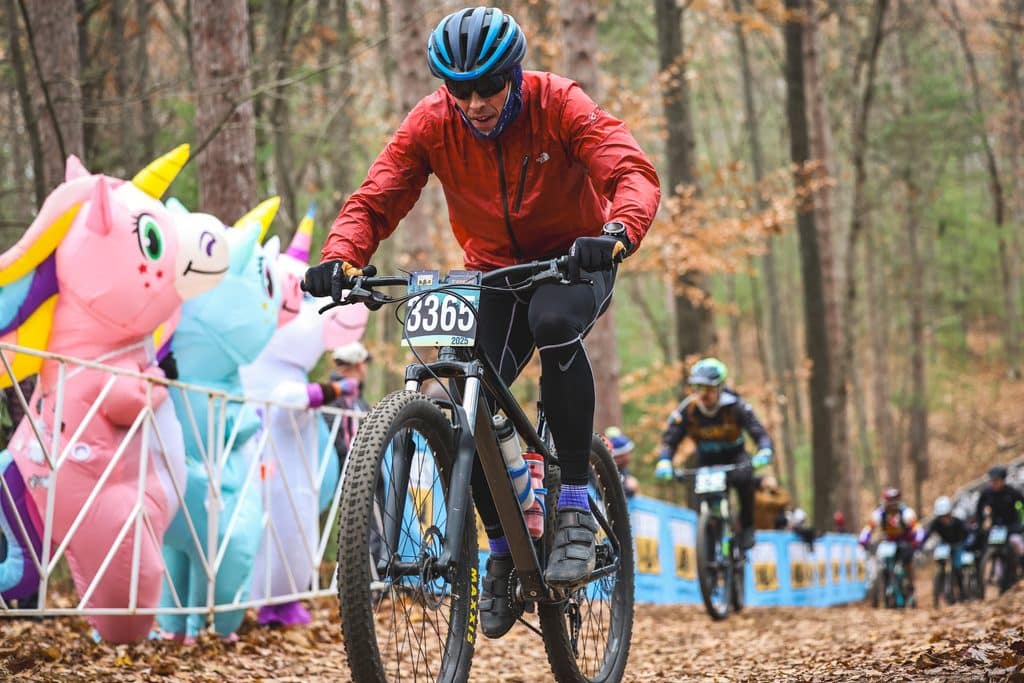
It’s a perfect Northern Michigan fall day. The crimson and gold leaves are falling and coating the trails around Timber Ridge Resort near Traverse City. The normally quiet woods are buzzing with activity. It’s just days before the annual Iceman Cometh Challenge bike race, and riders are out, getting a feel for the trail, sizing up the finish line.
George Shumar and his 16-year-old daughter Piper are two of the people hitting the trails. Piper is gearing up for her third Iceman. Her father has lost count; he thinks it may be nine or 10. The two have tackled many other races, but this is their favorite. Not just because it’s near their backyard, but because there is a sense of what they both call “community.”
“You get to meet a lot of people from all around the state,” Shumar said. “People that don’t even ride bikes come out to cheer people on that ride.”
Large crowds encourage the athletes at the most challenging climbs. But the Shumars say the finish line is most memorable.
“The ending is my favorite,” Piper said. “You’re not even able to think because it’s so loud. No one cares what your time is. No one cares how fast you’re going. I’ve cried a few times at the end. Not because I’m sad, but because it’s so much at one time. Emotionally, you’re lifted.”
Added Shumar: “You could be the slowest guy in the world; they’re cheering you like you are winning the gold medal in the Olympics.
The pair are just two of more than 6,000 people who will tackle this year’s Iceman on Saturday, Nov. 7. With family, friends, and supporters, more than 16,000 visitors will be attracted to what is considered the largest single-day mountain bike race in the United States.
As one of Michigan’s premier cycling traditions, this ride anchors a robust calendar of iconic statewide events—such as the Ore 2 Shore, Zoo-de-Mack and Barry-Roubaix—that collectively draw tens of thousands of participants and spectators. Events like these serve as powerful economic and cultural catalysts for the state’s expanding outdoor recreation industry. They highlight the state’s world-class trail networks, gravel roads, and natural landscapes while driving tourism revenue, supporting local small businesses, and cementing Michigan’s reputation as a premier four-season destination for outdoor enthusiasts.
The Challenge
The Shumars know to be ready for surprises along the route. There is no single Iceman Challenge. That changes every year.
First, you have the unpredictable Northern Michigan November weather. Some years it can be warm and placid, a summer-type of experience. Some years it’s a bitter early winter challenge. Still, some years it can change during the ride: it starts in one season and ends in another. Riders tell tales of starting with a wicked, bitter snow squall and ending under a warm sunny sky.
Then, there’s the course itself. It changes from year to year. It’s touted as a 30-mile route starting in Kalkaska and ending in Traverse City. In reality, a “course master” maps out a different route every year. The course can be anywhere from a 30-mile trail to a 35-mile trail. It winds through a wooded single-track path to cross-country Nordic ski trails.
“It always evolves, and that’s what makes it so exciting,” said Kat Paye, who is executive director of the Festival Foundation, the race organizer.
The Iceman Cometh Challenge started 37 years ago as the brainchild of Steve Brown. He gathered friends and family in his garage to plan the inaugural modest event. Today, it’s a race with more than $72,000 in prize money. Iceman is capped at around 6,000 athletes of all ages. The valued slots quickly sell out. While many of the racers come from Michigan, they have traveled from 36 states and four countries. It’s considered the final major event of the season.
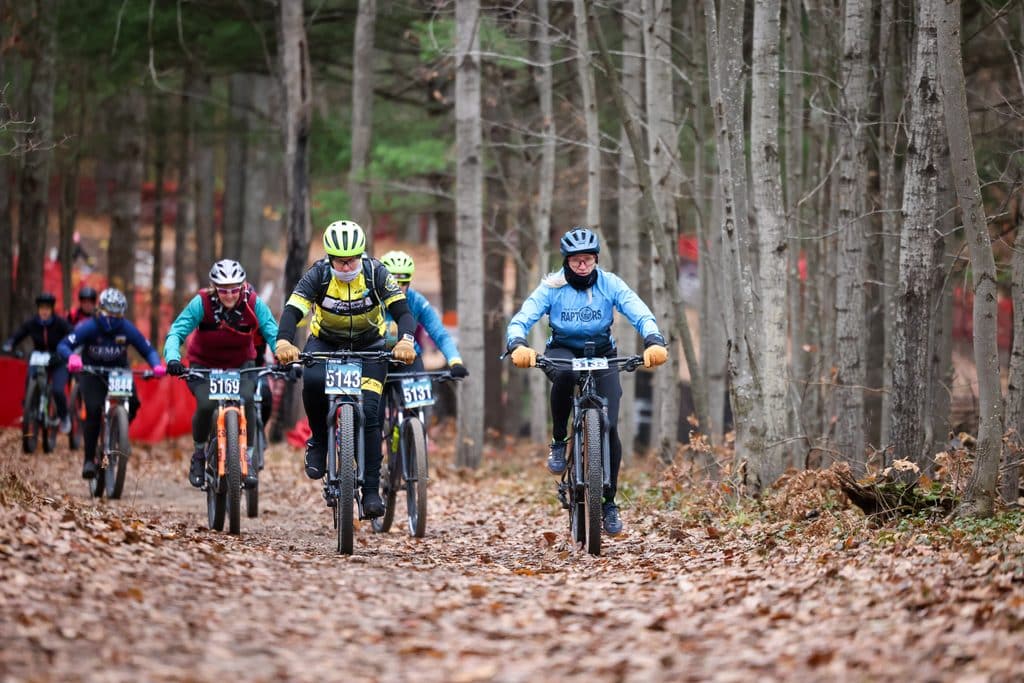
“It’s just the season finisher in the mountain biking world like no other,” said Paye. She noted it’s the experience of the ride that leaves a lasting impression. To highlight that point, the organization gives out many awards at the end, but the top professional award is fleeting.
“There is no other trophy that we know about in the racing world you don’t get to keep,” said Paye. The reason? It’s made of ice. “So you get to ride your heart out through the forest and to receive a trophy that you’re going to have for maybe 24 hours, and then it’s gone.”
The race may be a single-day event, but its impact is far greater. Paye said riders start showing up weeks before the event to get a feel for the course. Once the official route is announced, the athletes hit the trail to find their groove.
“Not only are you seeing riders check out the area in advance of the race, they’re coming out maybe a few times throughout the year to get a sense of the area,” said Trevor Tkach, president of Traverse City Tourism. “It also secures our position as a mountain bike destination.”
Tkach says Iceman comes at a perfect time, when the rush of summer travel declines and the pace in the region is a little slower. He said the hope is the athletes have a great experience and want to return several times during the year. He adds there is a natural synergy between the race and travel to the region and outdoor recreation.
“We definitely see a strong commitment from the mountain bike community, the outdoor recreation community to making the Traverse City area a regular stop,” Tkach said. “It doesn’t come as a shock that people would fall in love with the region for more than just the trail system. We put together the food scene, the wine, all the experience of getting on the water. It’s true to who we are.”
Beyond the race
Iceman perpetuates the outdoor recreation experience through its support of the trail system. According to the Festival Foundation Community Report, last year more than $43,000 was donated to the biking community from the event. Riders also make direct contributions. They are asked to help sponsor the Sno-Cone registration costs for kids to have their first experience with bike competition. They directly donated over $20,000 to cover the costs for the pint-sized participants.
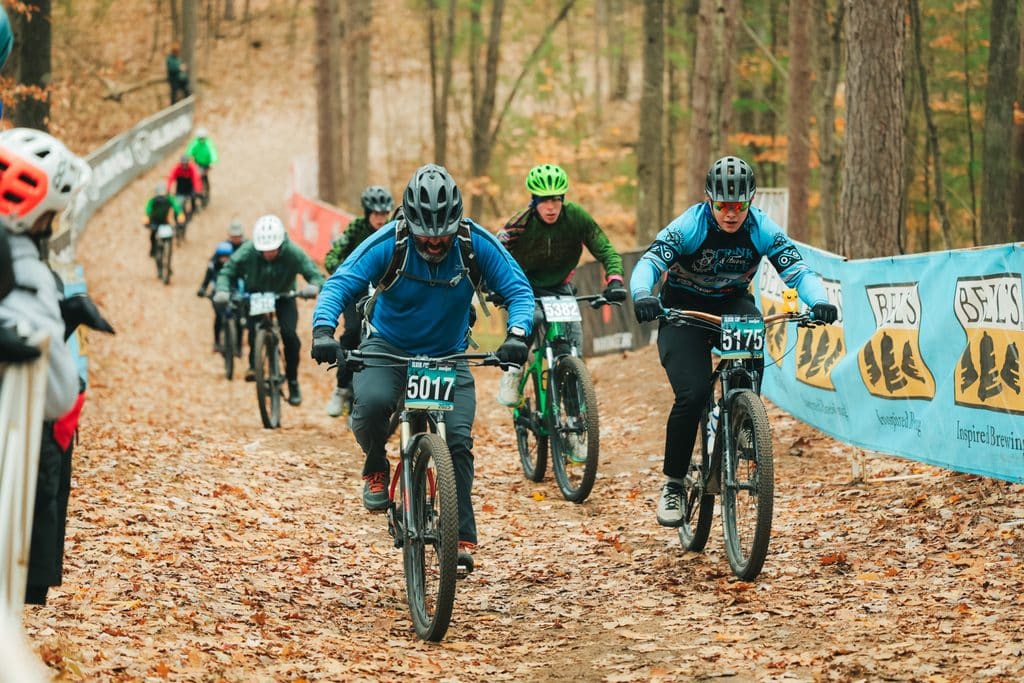
Since the race sells out every year, the metrics fail to tell the success story for Iceman.
For Paye, the success of the event is told through the feedback from the spectators and athletes. “Success isn’t always measured by the numbers,” said Paye. “It is by the amount of joyful mountain bike riders. You read the reviews. You read the comments. You read the e-mails. You look at their faces. They’re out, they’re excited, they’re doing something they love.”
Sixteen-year-old Piper has loved biking since she was three years old. Her passion has resulted in her making the awards podium every year she’s competed.
Even before this year’s race, she’s already planning on a return next year. “I don’t see why not,” she said.
Related Articles

St. Clair and Sanilac county leaders identify barriers to expanding rural mental health care
Behavioral health leaders in Allegan, Sanilac and St. Clair counties say flexible service models, regional partnerships and start-up funding could help more rural communities expand access to care.
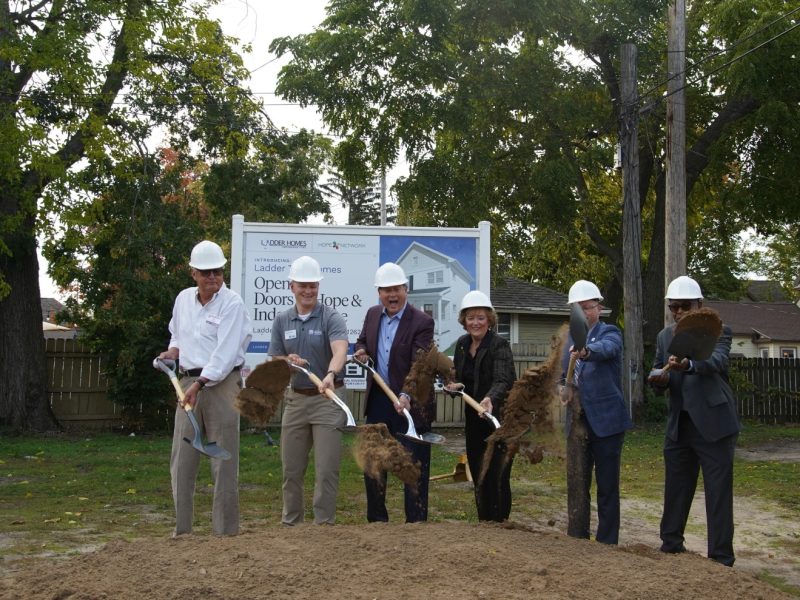
Three nonprofits building a home for people experiencing homelessness
Three organizations are building a Holland home to provide at least four people experiencing homelessness with stable housing and support.

Gene the Pumpkin Man’s legacy lives on at Evans Acres
After 67 years of growing pumpkins and creating fall memories, the late Gene “Pumpkin Man” Rhodes’ family legacy continues as Evans Acres Family Farm opens with plans to offer year-round family experiences.