
From Forest to Pharmacy: Researchers explore maple sap as a lifeline for cancer survivors
Researchers in Michigan and beyond are looking into potential health applications for maple sap.
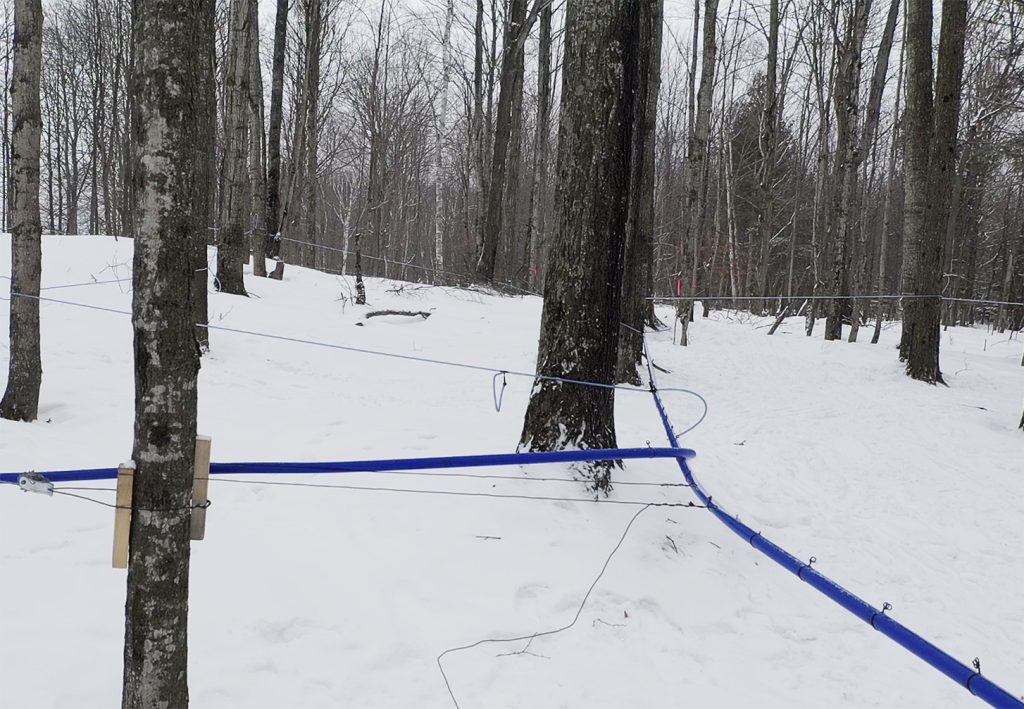
We have sugar maples to thank for the maple syrup that tops our pancakes. But what if there were healthier things to do with maple sap. What if it could help cancer survivors stay hydrated? Or help control the micro-organisms that can collect and contaminate catheter tubes? Or develop alternative forms of yeast?
Researchers at Michigan State University’s Forestry Innovation Center in Escanaba, working with a team from Northwestern University and Montana State University, are looking into potential health applications for maple sap. They’re doing it through their One Team, One Health initiative.
One Health is based on the concept that animal, environmental, human and plant health are closely connected to and interdependent on each other in ways that are cross-disciplinary yet unified. It brings researchers from many different fields together to work to find new, innovative ways to approach problems.
MSU has been incorporating One Team, One Health into its AgBioResearch Center mission since Jesse Randall took over as director in 2018.
Their work has the potential to give the maple industry incentive to grow in the U.P.

Research that advances how maple syrup is produced is critical to Michigan’s potential for growth of the maple syrup industry, Randall says.
“When you look at Michigan’s forestry inventory and analysis data — especially in the U.P. — we sit here with tappable trees that are available, and that number is larger than all of Vermont, New Hampshire and Maine combined,” he explains.
“We are blessed with the Great Lakes. We are blessed with some level of a climate buffer, at least here in the U.P..” Randall adds. “Those who are producers on the fringe of the maple region are beginning to catch hold of the fact that Michigan is the future. We are the sleeping giant of the maple industry.”
Randall hopes these research and outreach efforts will inspire new producers to tap existing trees while helping veterans scale up through modern, efficient technologies
His team’s research is focusing on several health applications for maple sap, including nutritious and tasty hydration for cancer survivors.
David Victorson, a professor of medical social sciences and director of research at the Osher Center for Integrative Health at Northwestern University’s Feinberg School of Medicine, is leading that effort.
Victorson, who is originally from Escanaba, had worked with Randall before to build a small sugar shack, where maple sap is processed and boiled down into syrup, at a cancer survivors’ support center in the U.P. called the WALDEN Institute, which is located on Lake Superior between Christmas and Au Train.
But Victorson had never thought of using maple sap in a different way until Randall mentioned that maple water — sap straight from the tree — is becoming a popular functional hydration drink in South Korea. because it has similar electrolytes and nutrients to coconut water with half the calories and half the sugar.
And in Canada, maple water is already a commercial product, sold as Untapped Mapleaid.

Dehydration is a problem among cancer survivors. When he heard about maple water, “a light bulb went off,” Victorson says. So he joined Randall’s research team.
Other team projects include developing alternative forms of yeast from the low-quality sap that is collected near the end of the season and discarded by producers or turned into an alcoholic beverage, and reducing microbial biofilms in the maple tubes that collect sap. These biofilms are a community of micro-organisms that stick to each other and a surface. They can inhibit the collection of sap and create off-flavored and lesser quality maple syrup.
The pathogens that cause these biofilms are also common in the medical industry and can appear within catheters of all kinds, so learning to eradicate them could improve health care dramatically.
All these projects exemplify what it means to study through a One Health lens, says Seth Walk, a professor of microbiology and cell biology at Montana State University who is part of Randall’s interdisciplinary and multi-university team.
“One of the major goals of One Health is to understand a problem by bringing in the knowledge gained from studying a similar problem in a totally different field,” Walk explains. “We can address the types of things we see growing in these maple sap lines because of information we already know, either in biomedicine or other production environments such as the brewing industry.”
Maple industry sees growth potential
“I think this is a great project,” says David Noonan, president of the Michigan Maple Syrup Association. “This research has the potential to greatly benefit the maple producers as another value-added product for the producers to market. In other words, as this research continues, I am hoping that soon maple producers will have one more product to put on the shelf for the public to benefit from.”
This will also give the public a choice of a “health food” to help enrich their lives. Maple sap is a naturally produced product that comes right from the maple tree. It has no additives, and it is wonderful that it is now being researched for the health benefits it may have, especially as a hydration beverage for cancer survivors.

The maple syrup association is a non-profit organization dedicated to educating, promoting and supporting the state’s maple syrup industry. It provides resources for producers, organizes events like Maple Weekend and sets quality standards to ensure high-grade production. The association has more than 150 members who produce more than 50,000 gallons of maple syrup annually.
“The work at Michigan State University on wider uses for maple sap with particular emphasis on hydration in cancer patients is a classic case of how interdisciplinary research and novel ideas can form from a nexus of expertise and interest,” says Robin Gardner, vice president of the Maple Society North America. “With the right thought-provoking context, a little serendipity and open minds, we are fortunate that the Genus Acer [the maples] has more to offer than sticky and expensive syrup, great though it is on traditional pancakes.”
The society is a non-profit organization focused on the cultivation, conservation, study and appreciation of maple trees. Serving as the North American branch of the International Maple Society, it connects enthusiasts, collectors and professionals through educational resources, meetings and research.
“The work in Michigan is reminiscent of earlier work in the Pacific Northwest on the cancer drug paclitaxel (Taxol), extracted from Pacific yew trees originally in the 1960’s,” Gardner goes on to say. “This early work and the latest discoveries at Michigan State show how important it is to conserve species—a quarter of all maples are threatened with extinction in their native habitats worldwide. Congratulations to the researchers on their One Health broad view of the botanical kingdom and its still hidden opportunities.”
Jim Adamski, president of the North American Maple Syrup Council, also sees great promise in the One Health research.
“Anytime that we see collaboration between multiple universities to explore the health and medicinal benefits of maple sap and syrup while simultaneously advancing sustainable maple production is a win for the maple industry not only in Michigan but across North America,” he says.
The council is an international network of maple syrup producer associations representing 16 commercial maple producing American states and Canadian provinces. The nonprofit trade association brings together industry leaders, researchers and affiliated industry groups to share common interests, experience and knowledge for the betterment of the maple syrup industry.
Michigan Tech also sees promise
Tara Bal, an associate professor of forest health in Michigan Technological University’s College of Forest Resources and Environmental Science, is not working with Randall directly, but she and her colleagues are aware of and watching his work.
“As colleagues working in forest health and maple systems, we follow developments that could affect the region’s maple industry and forest-based economy,” Bal says. As part of the hands-on coursework her students do, there’s a large emphasis and growing interest in value-added uses of sap beyond syrup, she adds.
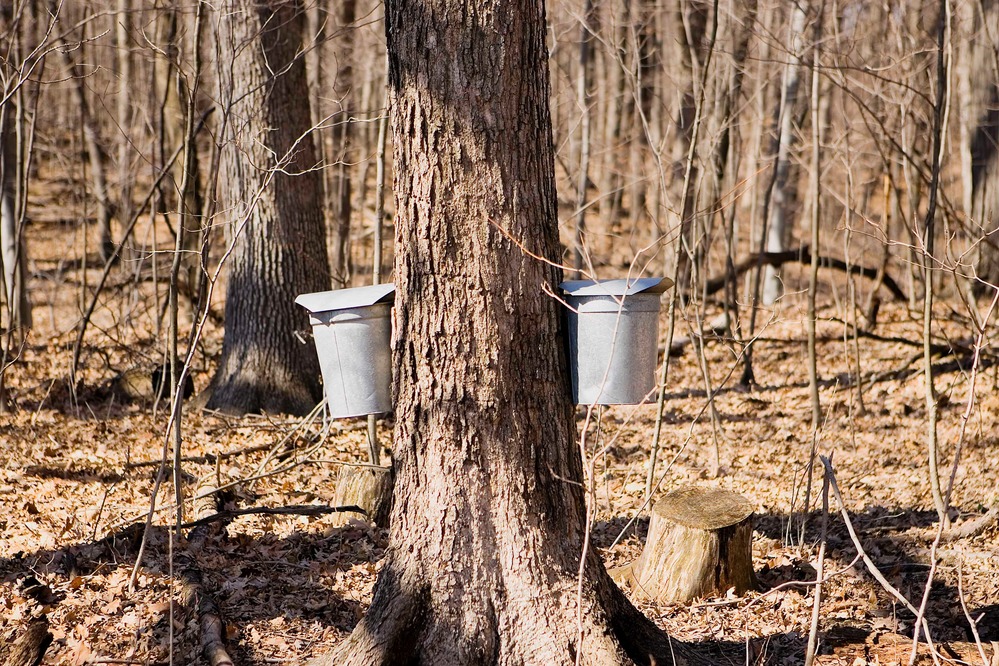
“The One Health framing that MSU is using is compelling and similar to efforts occurring here at Michigan Tech, particularly in recognizing the connections between forest ecosystems, human health and rural economies,” says Bal. “There is legitimate scientific interest in the antioxidant and phenolic compounds found in maple products.”
She thinks that if new, economically viable markets for sap emerge, that could strengthen incentives for landowners to maintain healthy sugar maple stands.
Bal also thinks that developing new maple sap products could stimulate the maple industry in the U.P.
“Diversification can increase economic resilience,” she points out. “The maple industry in the U.P. is growing but still relatively small compared to other regions. Additional value-added markets or popular alternatives could increase profitability per tap or provide another revenue stream to forest land owners. Something as important as significant linkages to health benefits could also encourage more investment in sugaring infrastructure in the U.P. and support regional economic development.”
Says MSU’s Randall: “We really were first in the nation to have this idea that maple sap and maple syrup could be viewed beyond just something you put on pancakes. The maple industry in the Upper Peninsula — and the health of the public —stand to benefit.”
Related Articles
MSU Names De Grins Oer Dairy 2026 Dairy Farm of the Year
The award recognizes farms that demonstrate excellence in management, innovation and leadership within Michigan’s dairy industry.

The Art of the Harvest: Cultivating community through farming and creativity
Traverse City-based Crosshatch has been working since 2005 to create thriving rural communities rooted in vibrant culture and strong farming economies.
New Michigan program aims to help farms continue by connecting buyers with sellers
MIFarmLink helps match aspiring farmers with those looking to retire and hand their operations over to the next generation.